 Netlify

Netlify is betting that the next test for developer platforms isn't whether AI agents can provision a service, but whether a project can move from setup to production without restarting elsewhere. The company calls this shift Agent Experience, and it's now positioning its Stripe Projects integration as proof of concept.
The company announced the integration in late April alongside a blog post from CEO Mathias Biilmann arguing that agents are increasingly responsible for scaffolding entire projects, not just writing code on demand. Netlify's argument is simple: if agents are now the first ones setting up infrastructure, platforms need to support the full cycle from that initial prompt through previews, review, and production deployment.
What Agent Experience Means in Practice
The concept centers on continuity. Agents might spin up a database, configure a frontend framework, or wire up payment processing, but if the project hits friction at the preview or deployment stage, developers end up migrating to another platform or manually reconfiguring services. Netlify's integration with Stripe Projects is designed to prevent that.
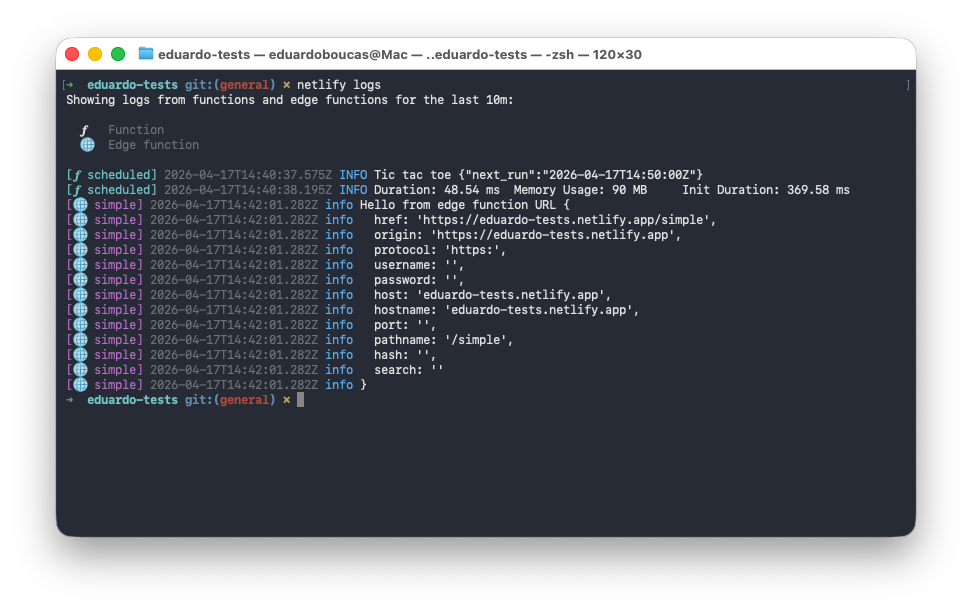
Developers can now use Stripe's CLI to provision payment infrastructure alongside a Netlify site in a single command. The integration handles environment variables, webhooks, and deploy previews automatically. It's part of a broader push from Netlify to support agent-first workflows, following their recent launch of CLI tooling that lets agents scaffold full-stack applications with a single prompt.
The company has been building toward this for months. In April, Netlify introduced Agent Runners, a feature that lets AI agents execute tasks directly on Netlify's infrastructure. That same month, they restructured pricing to eliminate per-seat models, arguing that traditional licensing doesn't work when agents generate code alongside human developers.
Why Stripe Projects Matters
Stripe Projects is Stripe's own attempt to simplify full-stack setup for payment-enabled applications. By partnering with Netlify as a launch and design partner, Stripe is signaling that deployment and hosting aren't separate concerns from payment infrastructure, they're part of the same setup flow.
For Netlify, the integration is a way to prove that Agent Experience isn't just a marketing concept. If an agent can provision a database, wire up Stripe, configure environment variables, and deploy preview environments without human intervention, the platform becomes more defensible as AI tooling matures.
Biilmann's LinkedIn post framed the shift as existential. "The question is no longer just whether an agent can provision your service," he wrote. "It's whether the project can keep moving after setup."
Broader Context
Netlify isn't alone in this. Vercel has been investing heavily in AI-assisted deployment workflows, and Replit has long positioned itself as an agent-friendly environment. The difference is in how Netlify is framing the problem: not as a feature race, but as a question of whether platforms can support projects that start with AI and scale to production without breaking.
The company also recently launched Netlify Database, an integrated Postgres offering with deploy preview branching. Combined with the Stripe integration and agent tooling, Netlify is building a stack where agents can provision infrastructure, developers can review changes in isolated environments, and production deploys happen without manual reconfiguration.
Whether Agent Experience becomes a widely adopted framework or just another way to describe agent-friendly tooling remains to be seen. For now, Netlify is using it to argue that the real value isn't in letting agents write code, it's in letting them ship it.
Sources
1 checkedHow we cover tool news: Create With's tool desk drafts these reports with AI from the sources listed above and checks them against those sources before publishing.

 Stripe
 Supabase

 Airtable

 Adalo

 Squarespace

 ElevenLabs