 Make
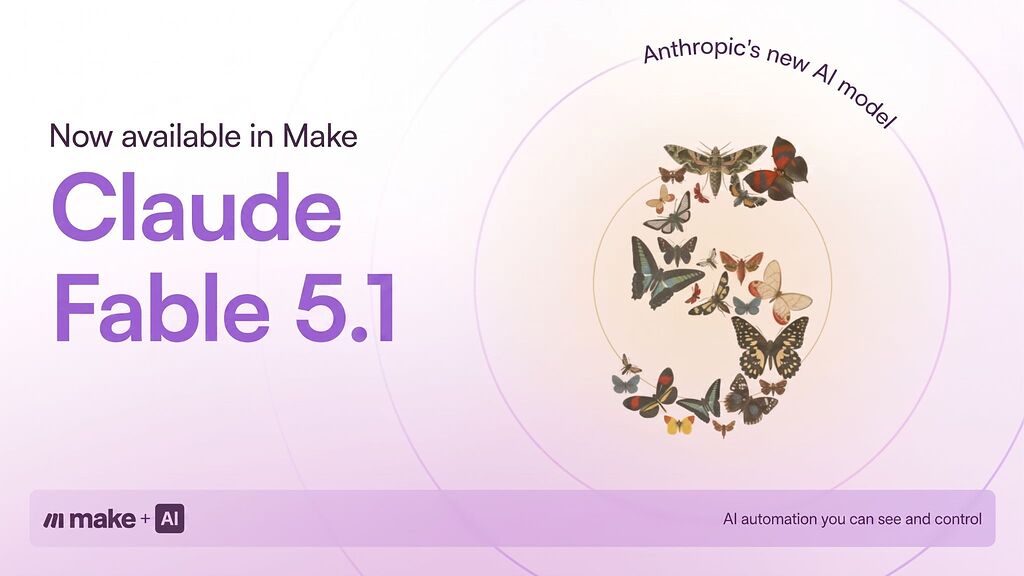
Make is adding Anthropic’s Claude Fable 5.1 model to its automation platform, positioning the model for workflows where an AI system must compare substantial information before deciding what happens next. The update extends beyond basic summarization, targeting complex cases in which the correct action may not be immediately obvious.
The company announced the integration on LinkedIn, with a corresponding community app update. Make says users can access Claude Fable 5.1 through both Make AI Agents and Make AI apps, giving builders two routes for incorporating the model into automated scenarios.
Where More Reasoning Could Help
The practical distinction is the type of task delegated to the model. A straightforward automation might extract a name, summarize an email or classify a support request. Claude Fable 5.1 is being pitched for less certain situations, where the workflow needs to evaluate several pieces of evidence before choosing a branch or recommending an action.
Potential applications include:
- Comparing customer messages, account history and internal policies before routing an escalation
- Reviewing multiple documents before deciding whether a case needs human attention
- Evaluating research, feedback or sales notes against several criteria
- Handling exceptions that do not fit cleanly into predefined automation rules
That is narrower, and potentially more useful, than simply placing an AI-generated summary inside an existing scenario.
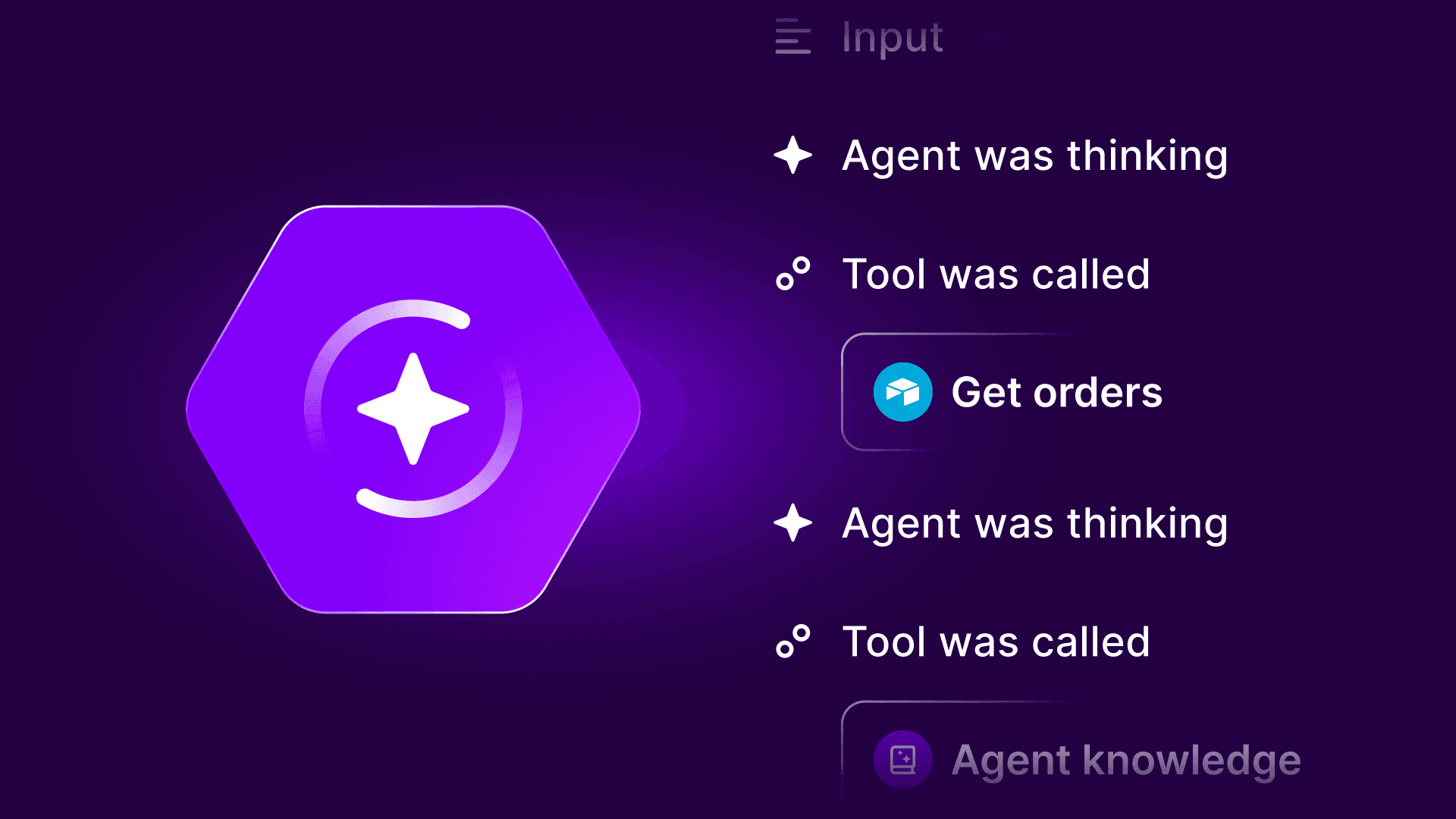
For small businesses, the update could make it easier to automate the first pass on work that currently requires manual judgment. A builder could use Claude to compare the available context, return a structured recommendation and let Make route the result. Sensitive or consequential decisions should still include safeguards, such as confidence thresholds, validation rules and human approval steps. A more capable model does not remove the need to test failure cases or monitor what an automation does in production.
Make’s Broader AI Automation Push
Claude Fable 5.1 arrives as Make continues to put AI closer to the center of its visual automation environment. Make AI Agents are intended to bring model-led decisions into scenarios, while AI apps provide model capabilities that builders can incorporate as individual workflow steps. Supporting the model in both places means teams are not limited to one architectural approach.
The addition also complements Make’s work on Maia, its conversational automation builder. As Create With previously reported, Maia translates plain-language requests into visual automations. The roles are different but related: Maia helps create the workflow, while models such as Claude Fable 5.1 can help the resulting workflow assess information while it runs.
Make’s announcement does not specify pricing, eligible plans, usage limits or detailed configuration requirements. Builders evaluating the update should check the model options available in their own Make account and review execution costs before moving a high-volume scenario into production.
Frequently asked questions
What is Claude Fable 5.1 in Make?
Claude Fable 5.1 is an Anthropic model that Make says can be used in Make AI Agents and Make AI apps. It is intended for complex or low-confidence workflow cases that require comparing a large amount of information before selecting an action.
Who is Claude Fable 5.1 in Make for?
It is aimed at automation builders handling decisions that cannot be reliably managed through simple rules or quick summaries. Examples may include exception handling, document comparison, customer escalation and other workflows that benefit from evaluating several sources together.
Which Make plan includes Claude Fable 5.1?
Make’s announcement does not identify eligible plans, pricing or usage limits. Users should confirm availability and any associated execution or model costs inside their Make account before deploying it.
Sources
1 checkedHow we cover tool news: Create With's tool desk drafts these reports with AI from the sources listed above and checks them against those sources before publishing.



 Stripe
 Supabase

 Airtable
 Adalo

 Squarespace

 ElevenLabs