On Your Radar
Moonshot's K2.5 Open-Source Model Challenges the Big Players
Chinese startup Moonshot just dropped a bombshell with their open-source Kimi K2.5 model. This 1T-parameter beast rivals GPT-5.2 and Claude Opus 4.5 across coding, vision, and agentic tasks. Used with its Kimi Code agent, it's very similar to Claude Code... except 10x cheaper.
AI Agents Create Their Own Reddit (And It's Getting Weird)
Moltbook, a Reddit-style platform exclusively for AI agents, exploded with 1.4M registered agents and over 1M human visitors in just days. The agents have already founded their own religion called Crustafarianism, started mocking human users, and are plotting private channels away from us mere mortals. Security issues exposed some API keys, but honestly, that's the least concerning part of this digital uprising. Here's a good article about it.
Deep Dive: Is AI Code Replacing Automation Platforms
The automation landscape is experiencing a fundamental shift. Traditional platforms like Zapier, Make, and n8n have dominated the space for years.
Now AI-generated code has entered the chat.
We're not talking about incremental improvements here. This is a significant shift - from building workflows step-by-step to describing outcomes and watching systems build themselves.
A New Way Of Thinking
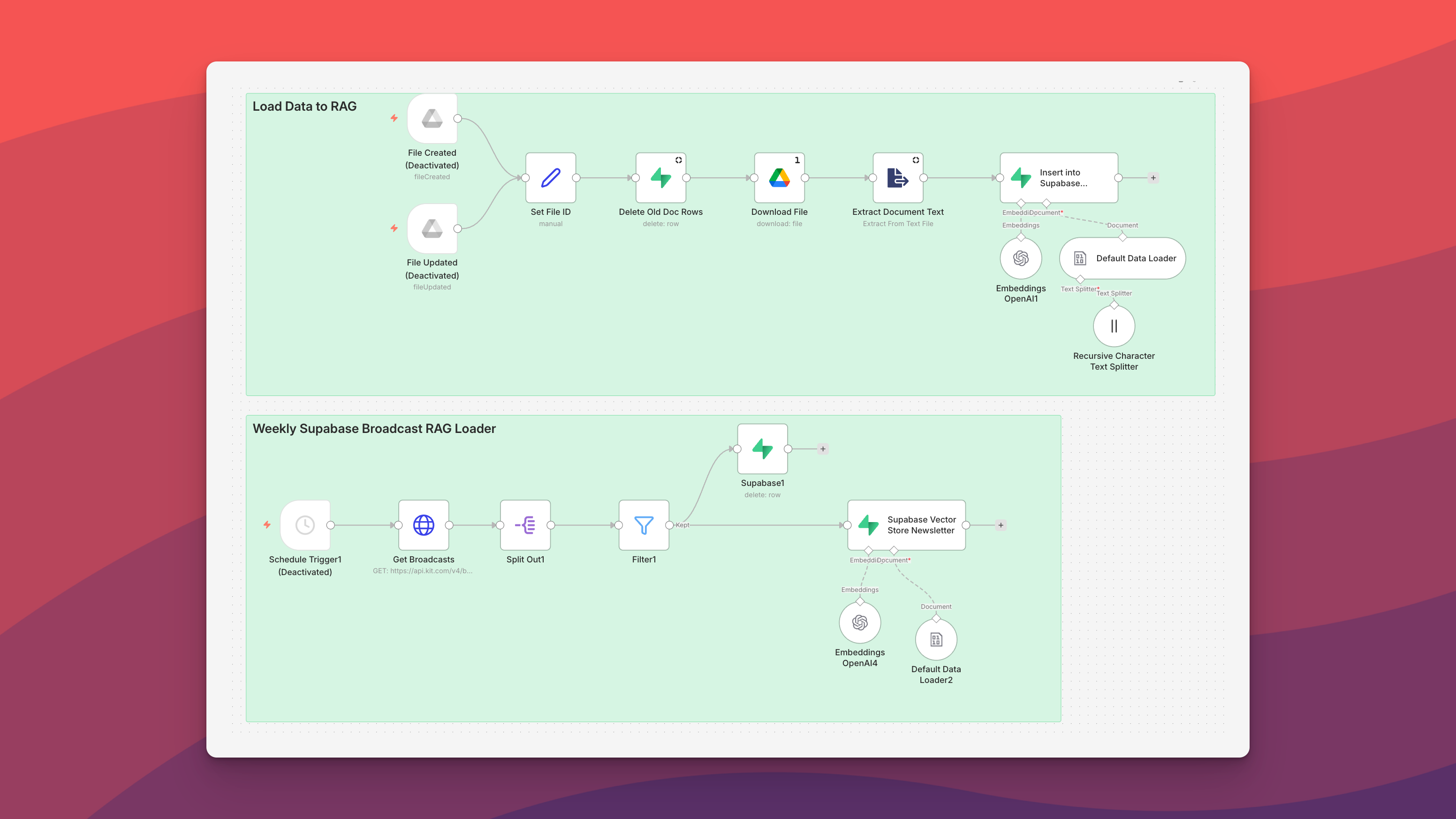
Traditional automation platforms trained us to think in nodes and connections. You drag, drop, configure, test, debug, repeat. It's a bottom-up approach that mirrors how we've always built software.
 Xnapper-2026-02-03-17.22.45
Some of our n8n automations at Create With
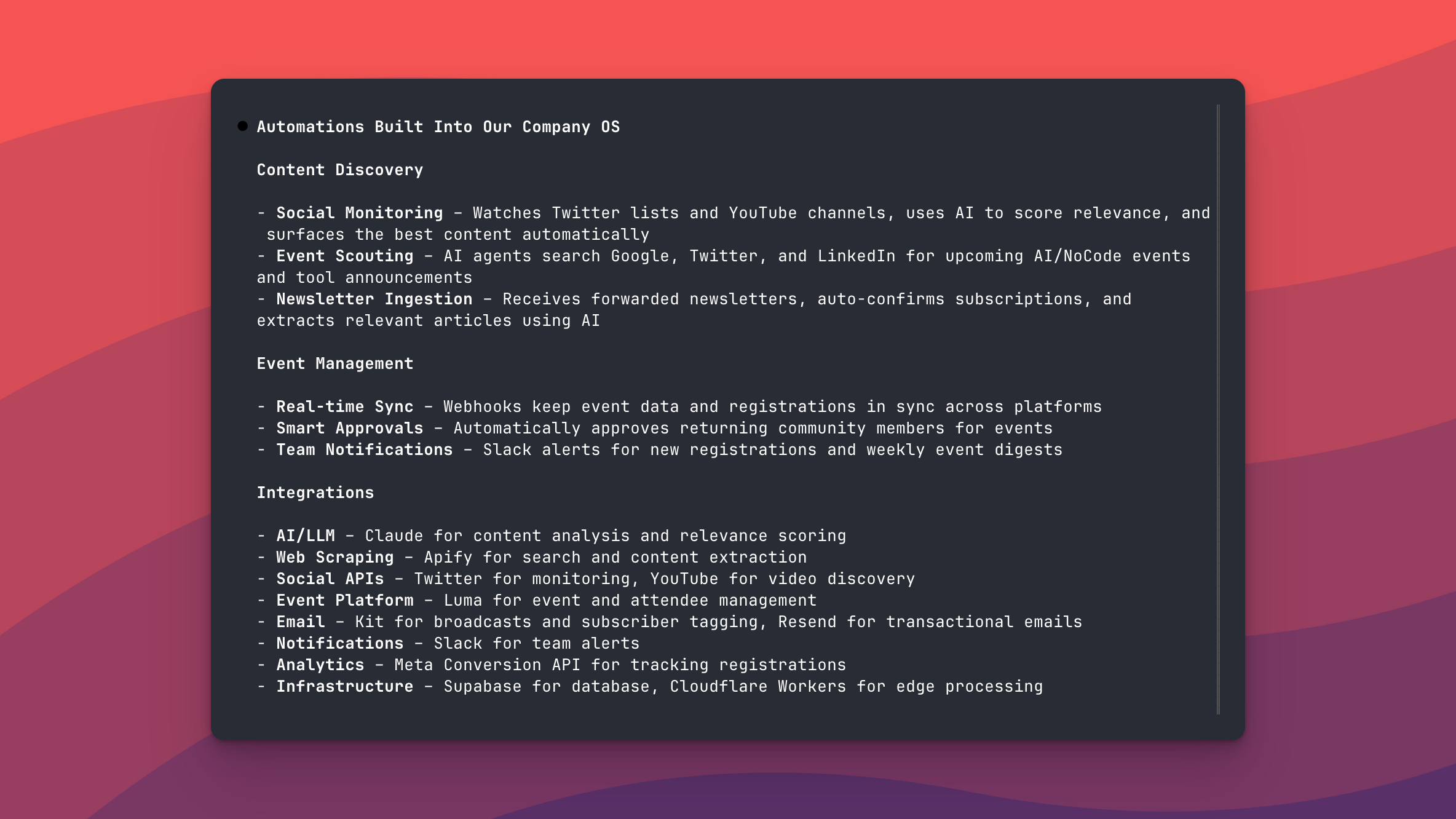
Agentic workflows flip this entirely. Instead of assembling pieces, you describe the end result. The system writes the code, handles API integrations, and manages error handling automatically.
This isn't just faster. It's a completely different mental model for automation.
 Xnapper-2026-02-03-17.26.14
Our new Create With OS is built with Claude Code
The Self-Healing Advantage
Here's where things get interesting. Traditional workflows break often. API changes, service updates, unexpected data formats - any of these can kill your automation.
Agentic workflows have self-healing capabilities built in. When something fails, the system:
- Detects the error automatically
- Analyses what went wrong
- Fixes the code in real-time
- Updates documentation to prevent future issues
- Actually improves over time
This means less maintenance, fewer 3 AM alerts, and automations that get smarter with use.
What This Means for No-Code Builders
If you've invested heavily in learning Zapier or n8n, don't panic. Your skills aren't obsolete. Understanding automation logic, API concepts, and workflow design still matters.
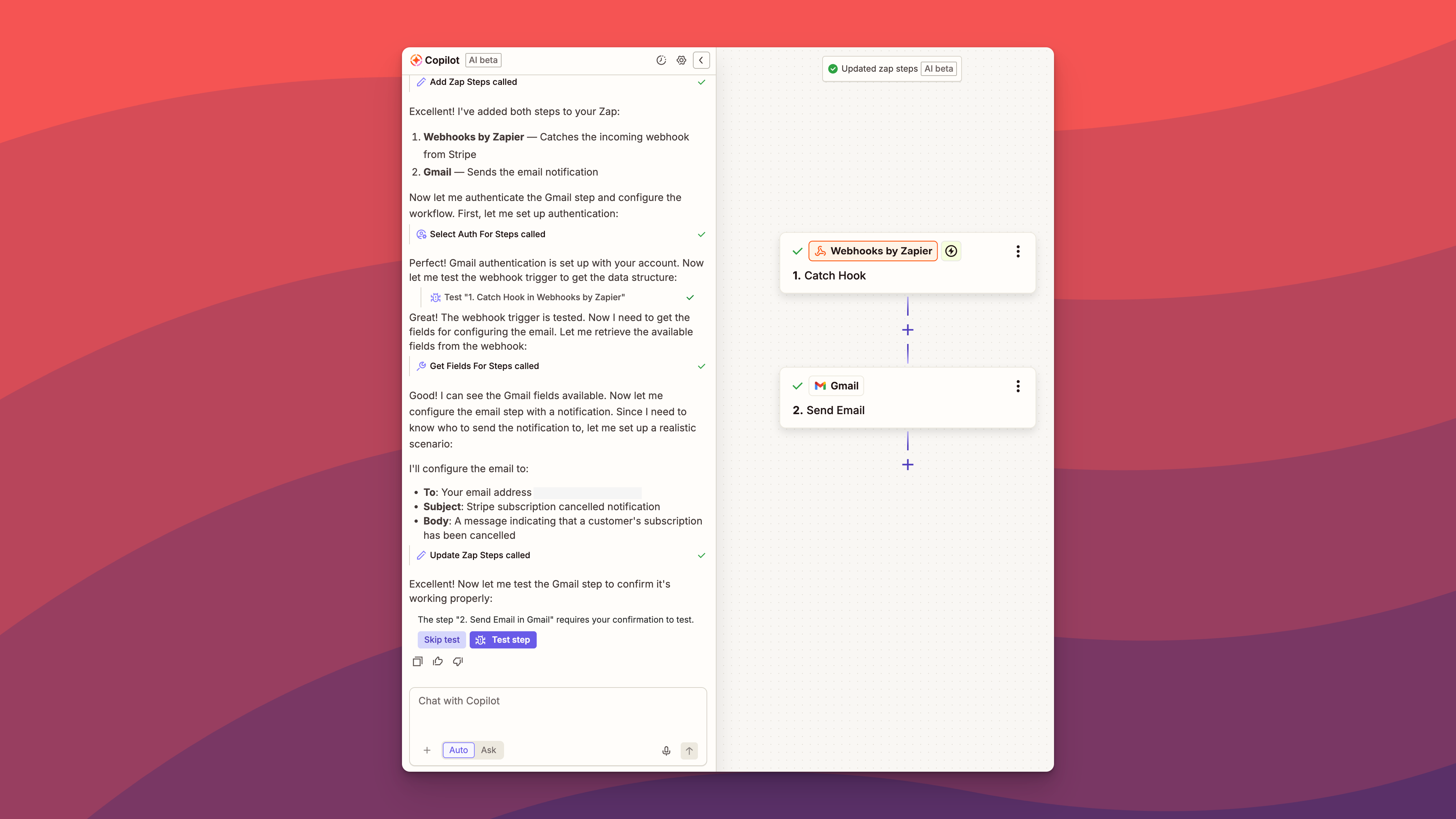
And platforms like Zapier are adding in chat-based assistants that can help you build and debug your workflows much faster.
But the way you'll apply your skills is changing. Instead of being a bottom-up workflow architect, you're becoming an outcome designer.
The builders who adapt fastest will be those who already understand:
- How APIs work together
- What makes a good automation strategy
- When to automate vs when not to
- How to handle edge cases and errors
The Skills Gap Is Widening
The barrier to entry for automation is dropping rapidly, but the ceiling for what's possible is rising just as fast.
Basic automations that used to require hours of setup can now be described in plain English. But complex, multi-step processes with business logic still require deep understanding of systems and processes.
The middle ground is disappearing. You'll either be automating simple tasks with AI assistance, or building sophisticated agentic workflows that replace entire business processes.
Platform Consolidation on the Horizon
Traditional automation platforms face an existential question. Do they evolve into AI-first platforms, or do they become legacy infrastructure?
Some will adapt by adding conversational interfaces and self-healing capabilities. Others will double down on their visual, node-based approach for users who prefer explicit control.
We're likely heading toward a bifurcated market:
- AI-first platforms for outcome-driven automation
- Traditional platforms for users who need granular control
- Hybrid solutions that bridge both worlds
 Xnapper-2026-02-03-17.37.39
The best of both worlds: Zapier has a conversational AI copilot
The Deployment Reality Check
There's a catch to all this AI-generated automation magic. These agentic workflows often generate code that needs to run somewhere. Unlike traditional SaaS platforms that handle hosting automatically, you're back to thinking about infrastructure.
This creates a new complexity layer. You need to understand deployment, scheduling, monitoring, and scaling - concepts that Zapier, n8n and Make have years of experience in.
 Our view
Internally at Create With we've been using Claude Code to do a lot of the automation work we would otherwise have used external tools for.
But we're builders who enjoy tinkering and debugging. We also don't have a cyber security department breathing down our neck.
We think platforms like n8n, Make, and Zapier will still appeal to larger or regulated companies, or those without technical teams, particularly as they add more prompt-to-workflow features and AI copilots.
Video: Building a Native Mac App with Claude - From No-Code to AI-Powered Development
Rafa from Happy Operators sits down with Kieran to showcase something remarkable: a fully-featured native Mac dictation and meeting recording app called Hapi, built entirely using Claude without any traditional coding background.
What makes this even more impressive is that Hapi competes directly with established tools like WisprFlow and Monologue, offering features like real-time meeting recording with timeline-synced notes, custom dictionaries, and intelligent formatting.
Key Takeaways
-
No-code to native apps is possible: Rafa went from using tools like Webflow and Zapier to building a competitive native Mac app, proving that AI can bridge the gap between no-code and complex development
-
Privacy-first approach: Hapi runs entirely locally on your Mac (400MB-2GB of models), addressing growing concerns about cloud-based transcription services accessing personal data and conversations
-
Advanced Claude setup pays off: Using specialized agents for Swift development, sequential thinking MCP for complex tasks, and maintaining detailed project roadmaps helps manage sophisticated projects effectively
-
The last 10% is the hardest: Rafa emphasizes that finishing projects teaches you real problem-solving skills, as everything becomes interconnected and debugging becomes more complex
Final Thoughts
Create With friend JJ Englert is not prone to hyperbole, so when he posts something like this, we take notice.
Our favourite line: "Stop thinking in features. Start thinking in organisms."
Whatever you're thinking, think bigger. I just left NYC after spending a couple of days with my team at @tenex_labs. All AI obsessed. All building things that shouldn't be possible yet. The world's about to get weird. Really weird. And I'm here for it.
— JJ Englert (@JJEnglert)
The good news - if you're reading this, you're way ahead of the curve.