 Zapier

Gourmet Ads turned a scheduled call with Zapier into a company-wide AI transformation, according to a case study published by Zapier last week. The ad tech company used Zapier's Model Context Protocol (MCP) integration to connect Claude with Salesforce, Microsoft Advertising, Google Analytics, and internal platforms when native MCP options were unavailable.
The result: a weekly marketing report that consolidates insights from six different systems, completed in under 20 minutes instead of the two hours it previously required.
Bridging the MCP Gap
Benjamin Christie, who leads the initiative at Gourmet Ads, described the setup as an experiment that became foundational. "Sadly Salesforce hadn't launched their own MCP capabilities, so Zapier became the bridge between our AI workflows from Claude and many of the systems we rely on every day," he wrote on LinkedIn.
Zapier's MCP server gives AI assistants like Claude access to thousands of app actions without requiring custom API integrations. For Gourmet Ads, this meant pulling data from advertising platforms, analytics tools, and CRM records into a single AI-generated report for leadership.
The company now uses the workflow to surface what Christie calls insights "under the hood of marketing," combining campaign performance, customer data, and internal platform metrics in one place.
From Prototype to Company-Wide Rollout
Gourmet Ads initially built the marketing report as a proof of concept. The workflow proved reliable enough that the company is now expanding AI-powered reporting across other departments. Christie credited the Zapier team, including CEO Wade Foster and Rob Ayre, along with internal team member Justin Mosgrober, for enabling the shift.
The case study follows Zapier's recent push to position MCP as a low-code alternative to traditional agent orchestration. As we covered earlier this month, the company published detailed guides on using MCP to connect AI tools with business systems, emphasizing speed and simplicity over complex integrations.

MCP as Infrastructure
Zapier's MCP implementation supports over 8,000 apps, from productivity tools like Slack and Notion to CRM platforms like Salesforce. The protocol lets AI agents call app actions directly, such as creating records, sending messages, or pulling analytics, without developers writing custom code for each integration.
For businesses like Gourmet Ads, this approach removes a common bottleneck: waiting for SaaS vendors to build their own MCP servers. Instead, companies can connect existing workflows to AI assistants immediately using Zapier as middleware.
The tradeoff is dependency on a third-party service. Companies relying on Zapier's MCP layer for critical workflows need to account for potential downtime or changes to the platform's pricing or feature set.
What This Means for AI Adoption
The Gourmet Ads case highlights a pattern emerging across mid-sized companies: AI workflows often require stitching together data from multiple sources, and pre-built integrations accelerate deployment. Zapier's MCP offering positions the company as infrastructure for this use case, especially for teams without engineering resources to build custom agent frameworks.
Christie's note that Salesforce lacked MCP capabilities points to a broader issue. Many enterprise platforms have not yet adopted the protocol, leaving companies to rely on tools like Zapier, Make, or n8n to close the gap. As more vendors adopt MCP natively, businesses will face a choice: stick with middleware layers that work across platforms, or migrate to native integrations that may offer tighter performance but less flexibility.
For now, Gourmet Ads is betting on the former. The company's expansion of AI reporting suggests the approach is delivering enough value to justify the investment in building workflows around Zapier's MCP infrastructure.
Sources
1 checkedHow we cover tool news: Create With's tool desk drafts these reports with AI from the sources listed above and checks them against those sources before publishing.



 Stripe

 Supabase

 Airtable
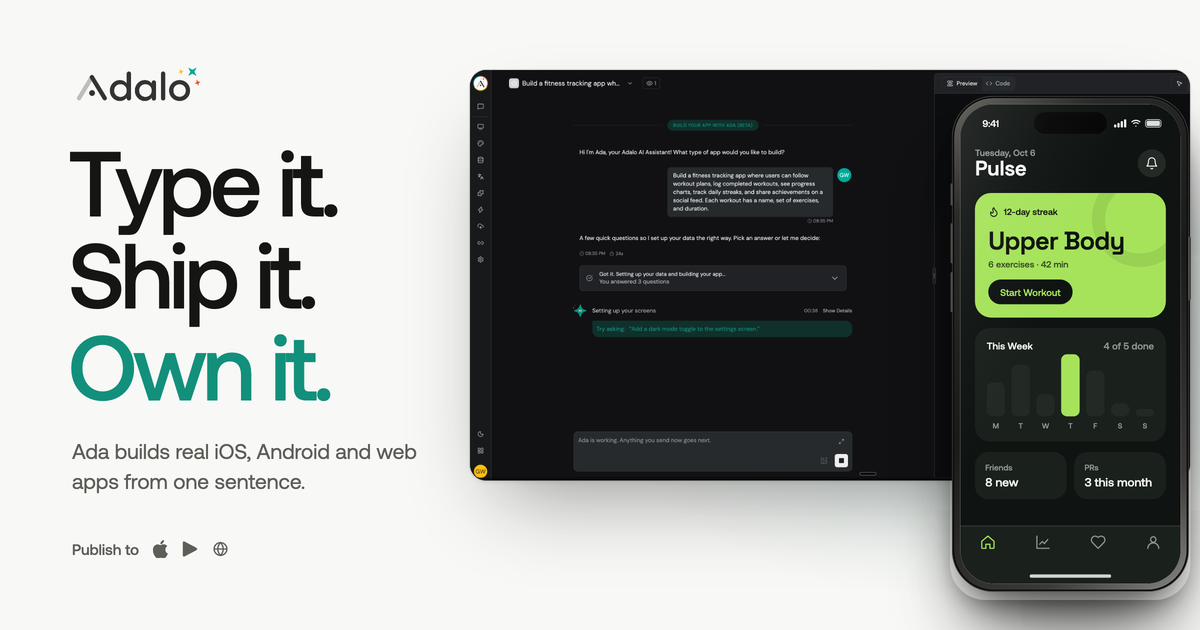
 Adalo

 Squarespace
 ElevenLabs