 n8n

Automation becomes a different proposition when a workflow can touch patient records, financial data, or customer credentials. n8n is addressing that risk with Workflow Security, a framework of controls intended to help regulated organizations govern who can access automations, where sensitive information lives, and how activity is recorded.
In a September 3 blog post, the company identifies six areas that teams should secure: role-based access control, secrets management, audit logging, data residency, environment isolation, and monitoring. Together, they target the broader security surface created when an automation platform stores credentials and runs processes across multiple business systems.
Six controls for governing workflows
Workflow automation platforms do more than pass data between applications. They hold authentication details for connected services, execute actions without continuous human supervision, and can scale a mistake or compromised account across many systems.
n8n's Workflow Security guidance divides that problem into six controls:
- Role-based access control: Restricts workflow and platform access according to a user's responsibilities.
- Secrets management: Governs how API keys, passwords, and other credentials are stored and retrieved.
- Audit logging: Creates a record of actions for investigations, internal reviews, and compliance work.
- Data residency: Helps organizations control where workflow data is stored and processed.
- Environment isolation: Separates deployments or stages to reduce the chance that development activity affects production systems.
- Monitoring systems: Gives security and operations teams visibility into workflow behavior and potential incidents.
The controls are relevant to healthcare, finance, and other sectors where automations routinely handle protected or sensitive information. n8n frames them in the context of HIPAA, SOC 2, and GDPR requirements. That does not mean switching on a single feature automatically makes an organization compliant; rather, the controls provide technical building blocks that can support a wider compliance program.
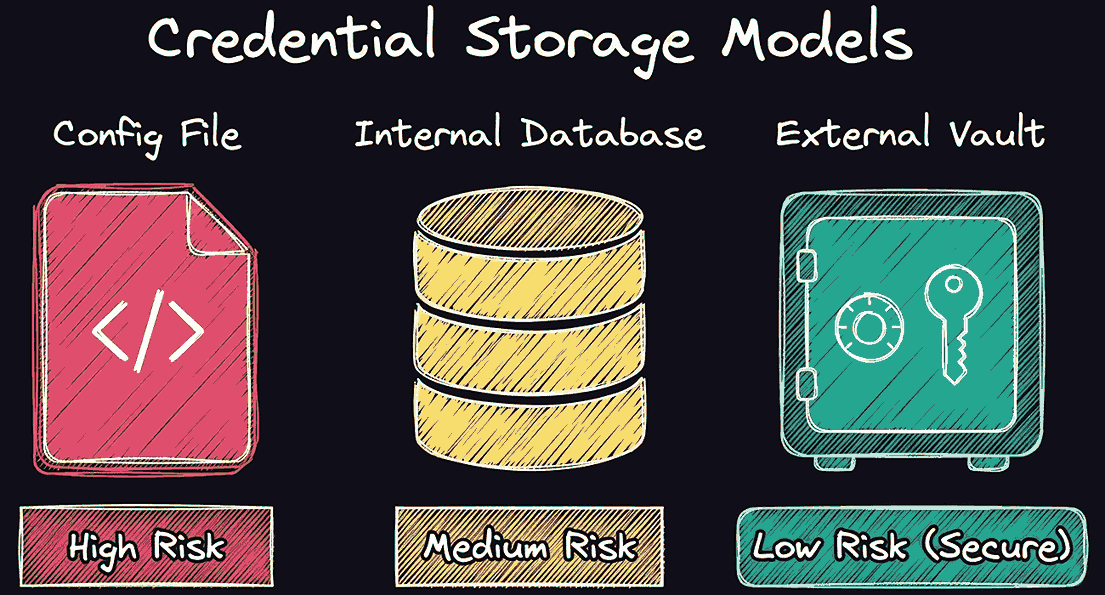
Credential handling is a particular focus. Citing a 2024 secrets management survey, n8n notes that 88% of respondents were concerned about secrets sprawl, while 96% stored at least some secrets outside secure locations, including source code and cloud configuration files. The company's comparison presents configuration-file storage as high risk, an internal database as medium risk, and an external vault as the lower-risk option.
Why self-hosting matters here
n8n argues that closed software-as-a-service automation products can make independent security assessments harder because customers have less visibility into code, execution behavior, and configuration. Its source-available, self-hostable model gives technical teams more control over deployment architecture and the location of data.
That flexibility comes with responsibility. A self-hosted instance still needs secure configuration, patched infrastructure, restricted administrative access, protected backups, and active monitoring. Source availability and deployment control can make governance easier, but they do not replace operational security.
For smaller businesses selling into regulated industries, the update is less about checking a compliance box and more about answering customer due-diligence questions. Buyers may want to know who can edit an automation, how credentials are protected, whether production is isolated from testing, where data is processed, and whether administrators can reconstruct an incident. Workflow Security gives builders a clearer structure for those conversations.
The focus also complements n8n's broader push toward enterprise governance. The company has added human oversight through Workflow reviews, which bring approval gates to enterprise automations. Approval gates and security controls address different risks, but both reduce the chance that sensitive workflows change or execute without appropriate oversight.
n8n has not provided plan requirements or separate pricing for Workflow Security in the supplied announcement. Organizations evaluating the controls should confirm which capabilities are included in their deployment and whether external infrastructure, such as a secrets vault or monitoring platform, is also required.
Frequently asked questions
What is n8n Workflow Security?
n8n Workflow Security is a set of practices and platform controls for protecting automated workflows in regulated environments. It covers access control, credential management, audit logging, data residency, environment isolation, and monitoring.
Does Workflow Security automatically make n8n HIPAA, SOC 2, or GDPR compliant?
No automatic compliance guarantee is stated. The controls are designed to help organizations meet relevant requirements, but compliance also depends on deployment configuration, internal policies, contracts, operational processes, and how sensitive data is handled.
Which n8n plan includes Workflow Security?
The announcement does not specify pricing or plan availability for the controls. Prospective users should verify requirements with n8n, particularly for enterprise access controls, audit capabilities, self-hosting, and integrations with external secrets or monitoring systems.
Sources
1 checkedHow we cover tool news: Create With's tool desk drafts these reports with AI from the sources listed above and checks them against those sources before publishing.



 Netlify
 Supabase
 Kajabi