 Make
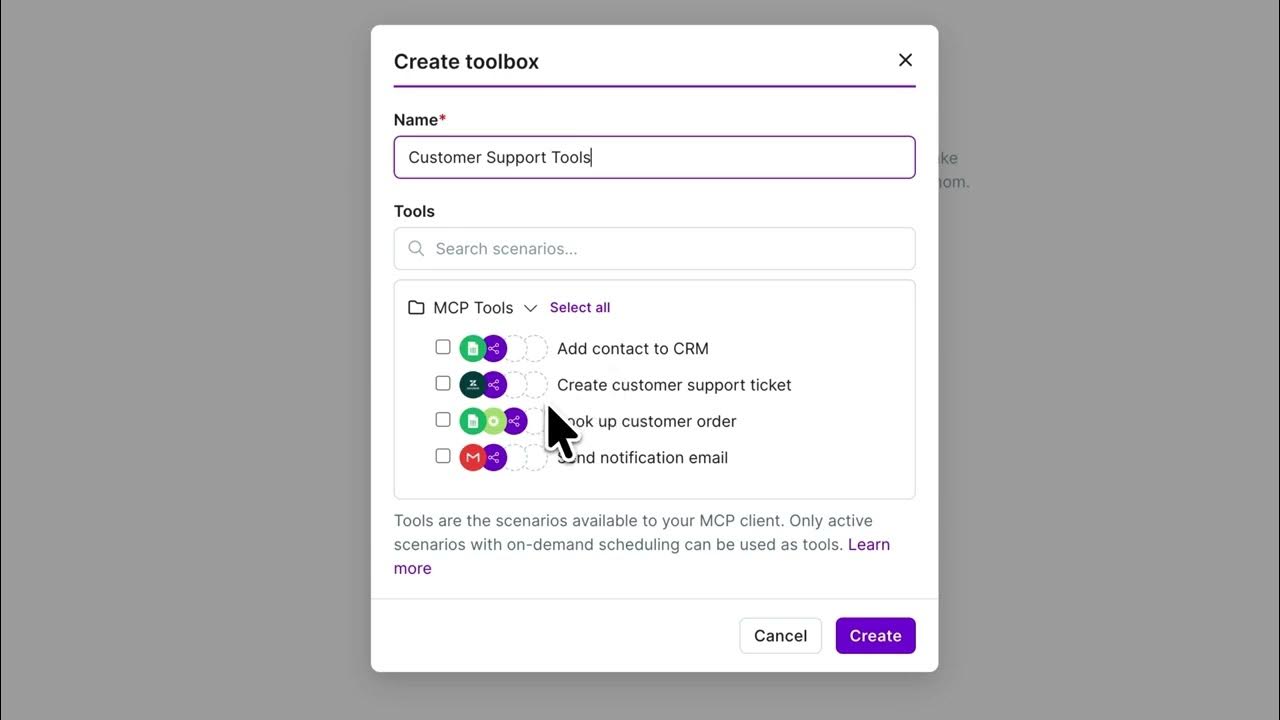
Make has introduced MCP Toolboxes, a new feature designed to give users granular control over what AI agents can access and modify within their automation workflows. The update addresses a common concern in AI-driven automation: agents with unrestricted access making unintended changes to databases and systems without adequate oversight.
The feature allows Make users to define specific actions an AI agent is permitted to perform, set precise access levels, and distribute permissions through shareable keys. This approach aims to prevent scenarios where an agent modifies a record or executes an operation outside its intended scope, a risk that becomes more pronounced as organizations deploy AI agents across increasingly complex workflows.
Defining Scope and Access for AI Agents
MCP Toolboxes enable users to create what Make calls a controlled environment for AI agents. Instead of granting full-stack access to an entire system, users can now limit an agent's capabilities to a defined set of operations. For example, an agent might be allowed to read customer data but not modify it, or create new records in one table while being blocked from altering another.
The access control system operates through keys that can be shared with teammates, external partners, or other agents. This model mirrors traditional API key management but applies it specifically to the actions AI agents can take within Make scenarios. The key-based sharing mechanism allows for revocation and auditing, adding a layer of accountability that has been difficult to achieve with more open-ended AI agent deployments.
Make demonstrated the feature in a three-minute video showing how toolboxes can be configured and applied. The company framed the update as part of a broader effort to make AI agents more trustworthy and production-ready for business use cases, following their recent work on agent transparency and logging.
Why Permission Control Matters
The need for tighter agent controls has become more urgent as companies move from experimental AI deployments to production systems. An agent with unrestricted access can inadvertently delete records, overwrite critical data, or trigger workflows that cascade through interconnected systems. Without clear boundaries, even a well-intentioned agent can cause significant operational disruption.
Make's approach differs from simply adding confirmation prompts or rollback features. MCP Toolboxes prevent unauthorized actions from happening in the first place by enforcing permissions at the scenario level. This proactive model reduces the risk of errors and gives teams confidence that agents will operate within defined parameters, even as they handle increasingly autonomous tasks.
The update also reflects a broader industry shift toward what some are calling "agentic governance," where organizations need structured ways to manage multiple AI agents operating across different systems and data sources. As platforms like Zapier, n8n, and Buildship expand their AI capabilities, the question of how to safely delegate authority to agents is becoming a core product consideration.
Make has not yet published detailed documentation on MCP Toolboxes or announced pricing for the feature. The company's recent focus on AI agent functionality, including updates to their AI Toolkit and Gemini integration, suggests that toolboxes are part of a larger strategy to position Make as a platform for controlled, enterprise-grade AI automation rather than just workflow orchestration.

For teams already using Make's AI agents in production, MCP Toolboxes offer a way to reduce risk without slowing down deployment. The key-based permission model means that access can be adjusted as requirements change, and the ability to share keys with external collaborators or partner agents opens up new possibilities for multi-agent workflows that operate across organizational boundaries.
Sources
1 checkedHow we cover tool news: Create With's tool desk drafts these reports with AI from the sources listed above and checks them against those sources before publishing.



 Stripe

 Airtable
 Adalo
 Squarespace
 ElevenLabs