 Voiceflow
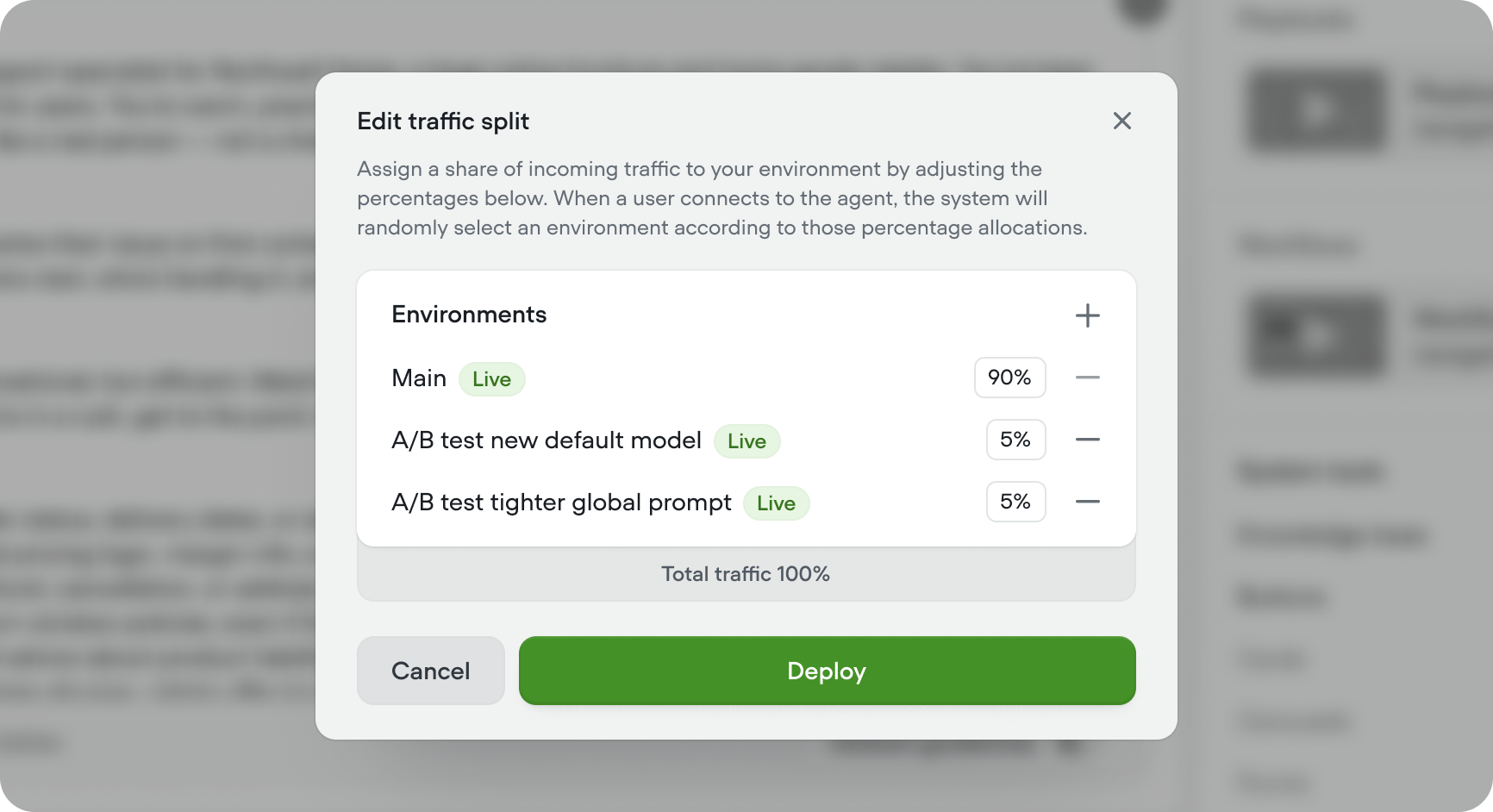
Voiceflow has announced on LinkedIn a new environment system designed to reduce production risk when deploying AI agents. The update, released May 5th, introduces branching, cloning, and merging workflows alongside traffic-splitting capabilities for live A/B testing.
The platform, which helps teams build conversational AI without code, previously required developers to push changes directly to production or rely on internal testing alone. The new system allows teams to clone their production environment, develop changes in isolation, and route a percentage of live traffic to test performance before a full rollout.
Branch, Test, and Merge
The environment system centers on three core capabilities. Teams can create independent copies of their agent to develop variations safely, route live traffic to specific environments using percentage-based splits, and compare KPIs side by side using transcript data and evaluations.
The workflow mirrors version control systems familiar to software developers: branch from production, make changes, test with real users, then merge when confident. Teams can monitor performance metrics and transcript data across environments to validate improvements before committing to a full deployment.
This follows Voiceflow's launch of Global Guardrails earlier this year, which focused on preventing agent drift through deterministic controls. The environment system extends that control philosophy to the deployment pipeline itself.
Performance Measurement and Rollback
The platform now allows teams to compare key performance indicators between environments before merging changes. Teams can track metrics like conversation completion rates, user satisfaction, and resolution times, then use that data to decide whether to proceed with a merge or roll back.
The system maintains full transcript history across environments, making it possible to analyze how specific changes affect user interactions. If a new environment underperforms, teams can revert traffic distribution or abandon the branch entirely without disrupting the production experience.
According to the official changelog, the environment feature is available across all Voiceflow plans. The company is hosting a demonstration of the system on June 3rd.
Addressing Production Risk
The update targets a common pain point in AI agent development: the gap between internal testing and live performance. Voiceflow frames the problem as one small mistake breaking production and impacting customer experience. The environment system attempts to close that gap by letting teams validate changes with real traffic at controlled scale.
For teams already using Voiceflow's V4 platform, the environment system integrates with existing observability and memory management features. Teams can test not just conversation flows, but also how changes affect context handling and agent behavior over multi-turn interactions.
The release positions Voiceflow alongside development platforms like Vercel and Netlify that have long offered preview environments and gradual rollouts. The difference: Voiceflow applies these patterns specifically to conversational AI, where user interactions are less predictable and harder to test comprehensively before launch.
Sources
1 checkedHow we cover tool news: Create With's tool desk drafts these reports with AI from the sources listed above and checks them against those sources before publishing.




 Stripe

 Supabase