 Voiceflow
Voiceflow has launched V4, a major platform update designed to give teams building conversational AI agents the control and observability typically reserved for custom-built solutions, without the escalating costs of maintaining proprietary systems.
The announcement, shared via LinkedIn, positions V4 as an alternative to becoming dependent on traditional AI agent vendors. Voiceflow emphasizes its platform provides the flexibility and visibility of in-house development while eliminating the technical debt and ongoing maintenance burden.
What V4 Brings to AI Agent Development
The V4 release includes several technical updates visible in Voiceflow's public changelog. One standout feature is asynchronous tool response capture. Previously, async API and function calls in Voiceflow were fire-and-forget operations, useful for logging but unable to store responses. Now developers can trigger async calls, continue the conversation flow, and reference results as they arrive.
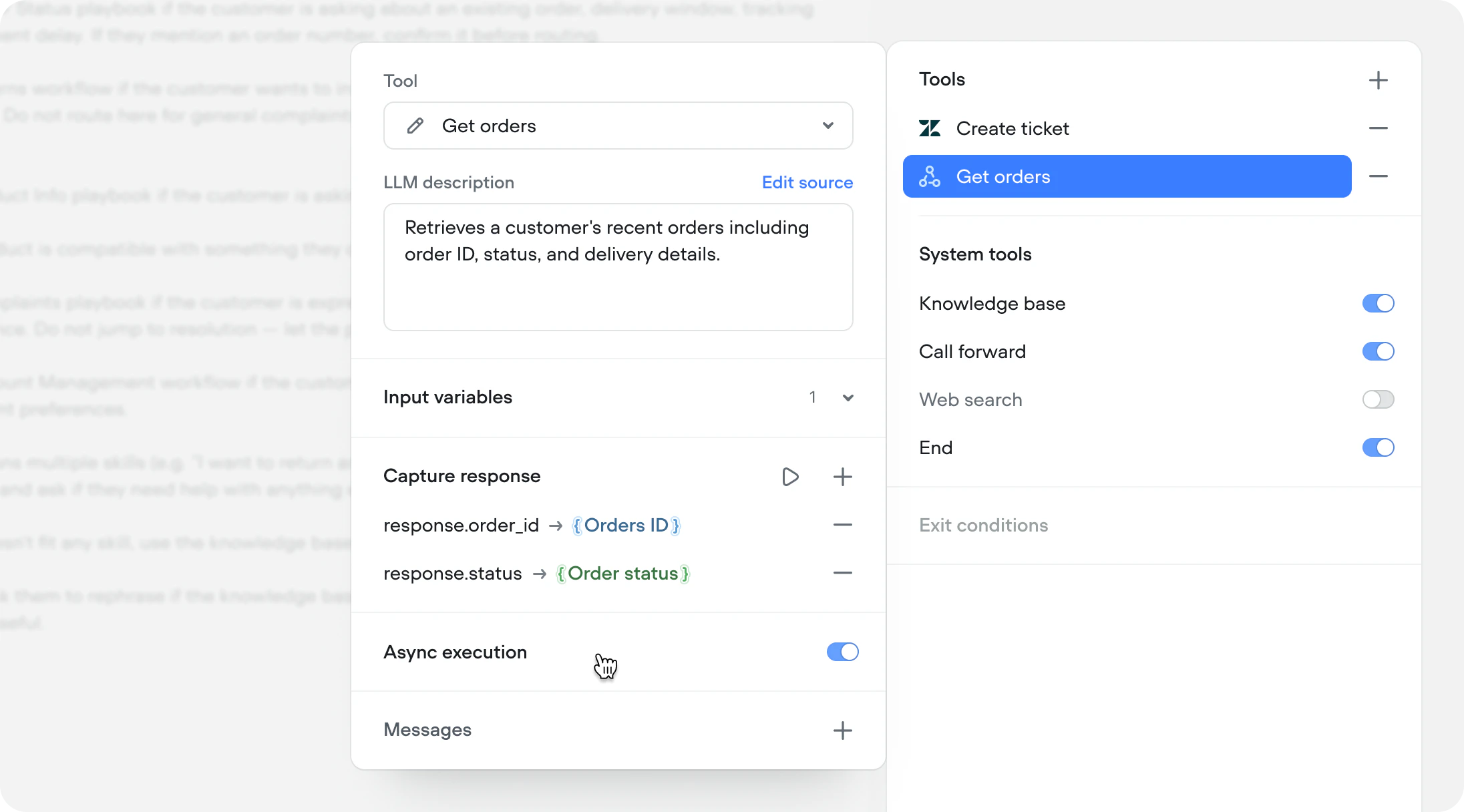
This enables predictive experiences: fetching customer order history during authentication, pulling account data while the agent greets users, or querying slow third-party services without blocking the conversation.
Voiceflow also added support for ElevenLabs' latest models. Scribe v2 Realtime, the company's newest speech-to-text model, now supports over 90 languages. The Eleven v3 text-to-speech model, supporting 70+ languages, is also available for developers seeking more expressive voice outputs.
Another quality-of-life improvement: agents can now display source URLs alongside knowledge base responses, allowing users to verify information or explore further. This applies to both knowledge base lookups and web search results, with configurable limits on how many sources appear per response.
Positioning Against Vendor Lock-In
The V4 announcement directly addresses a common concern among teams building AI agents: dependency on proprietary platforms that limit customization or charge escalating fees as usage scales. Voiceflow frames itself as infrastructure rather than a managed service, giving teams technical control while abstracting away infrastructure complexity.
As previously covered, Voiceflow has been expanding its enterprise capabilities with native voice agents and, more recently, global guardrails to prevent AI agent drift. V4 continues this trajectory by emphasizing observability and fine-grained control over agent behavior.
The platform's changelog shows a steady cadence of updates since March, suggesting active development and responsiveness to enterprise use cases. For teams evaluating build-versus-buy decisions around conversational AI, V4 offers a middle path: visual development tools with the depth of a custom stack.
Who This Affects
V4 targets product teams, developers, and businesses already invested in conversational AI but frustrated by platform limitations or mounting technical debt from homegrown solutions. The async response feature alone unlocks use cases in customer service, sales automation, and support workflows where agents need to coordinate multiple data sources without degrading user experience.
Voiceflow's positioning also suggests it's courting teams considering platforms like Bubble or Make for workflow automation but needing deeper control over conversational logic. The combination of visual design, API flexibility, and now async orchestration makes V4 competitive with code-first frameworks while remaining accessible to less technical builders.
The platform is available now for existing Voiceflow users, with V4 features rolling out across accounts. Teams interested in exploring the update can access documentation and tutorials through Voiceflow's knowledge base.
Sources
1 checkedHow we cover tool news: Create With's tool desk drafts these reports with AI from the sources listed above and checks them against those sources before publishing.




 Stripe

 Supabase