 Voiceflow

Safer experimentation for production AI agents
Voiceflow has expanded its Environments feature with traffic splitting and side-by-side testing, allowing teams to route slices of real customer traffic to experimental agent versions and compare performance metrics before pushing changes to production. The update was announced on LinkedIn by the company on May 21, with a live demo scheduled for June 3.
Teams can now clone their production agent, rework conversational flows, and test new logic against a percentage of live traffic while the original version continues serving most customers. The platform tracks resolution rate, CSAT (customer satisfaction scores), and custom evaluations for each environment in parallel. When a new version outperforms the baseline, teams can merge it to production with full versioning and attribution.
The feature builds on Voiceflow's existing Environments system, launched earlier this year to separate development, staging, and production workflows. Traffic splitting adds a controlled rollout layer that reduces the risk of deploying untested changes to all users at once.
How traffic splitting works
According to the announcement, teams start by cloning their production agent into a new environment. From there, they can rebuild conversation logic, adjust knowledge base queries, or test new models without affecting the live agent.
Once ready, they route a defined percentage of real traffic to the experimental environment. Voiceflow runs both versions in parallel, collecting performance data on each. The platform supports custom evaluation metrics alongside standard outputs like resolution rate and CSAT, giving teams flexibility to measure what matters for their use case.
Customers interact with whichever version they are routed to, but the split is invisible to them. No A/B test badges, no duplicate experiences. The system simply tracks which environment handled each conversation and attributes outcomes accordingly. When the new version demonstrates better performance, teams merge it to main and the changes go live for all traffic.
New model and retrieval improvements
The traffic splitting announcement follows two recent updates to Voiceflow's core platform. On May 14, the company released Voiceflow Core, its first proprietary language model optimized for agentic tasks like tool calling, multi-turn reasoning, and instruction following. Voiceflow benchmarked Core against models from Anthropic, OpenAI, and Google Gemini and reported stronger quality at lower per-token cost. The model is now available across all plans.
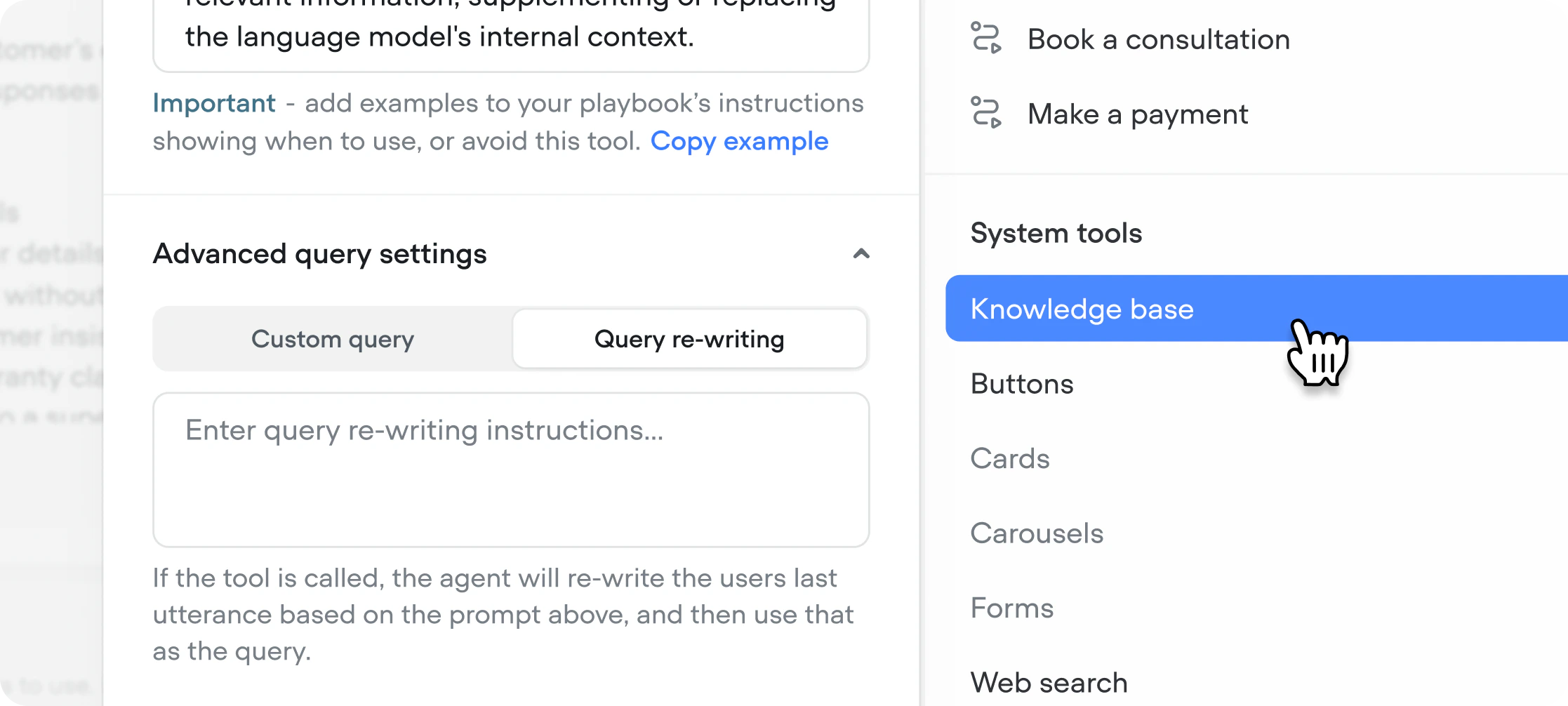
Six days earlier, on May 20, Voiceflow added query re-writing to its knowledge base system. The feature rewrites a user's last message before searching, using model instructions to interpret ambiguous or conversational phrasing. This helps when users ask questions that don't match the terminology or structure of the underlying content.
The combined updates address three common pain points in production AI agent workflows: safely deploying changes, improving retrieval accuracy, and reducing inference costs. Traffic splitting in particular removes a major barrier to iterating on live agents, since teams no longer have to choose between moving fast and breaking customer experiences.
Enterprise focus continues
Voiceflow has been adding enterprise-grade controls throughout 2026. In addition to Environments, the company introduced global guardrails to prevent agent drift and advanced memory management through its V4 Context Engine. Traffic splitting extends that pattern by making experimentation measurable and reversible, two requirements for teams deploying customer-facing AI at scale.
The feature is available now across Voiceflow's platform. Teams interested in the live demo on June 3 can find registration details in the original LinkedIn post.
Sources
1 checkedHow we cover tool news: Create With's tool desk drafts these reports with AI from the sources listed above and checks them against those sources before publishing.




 ElevenLabs

 Glide

 Stripe