 Notion
Notion Puts AI Coding Agents on the Task Board
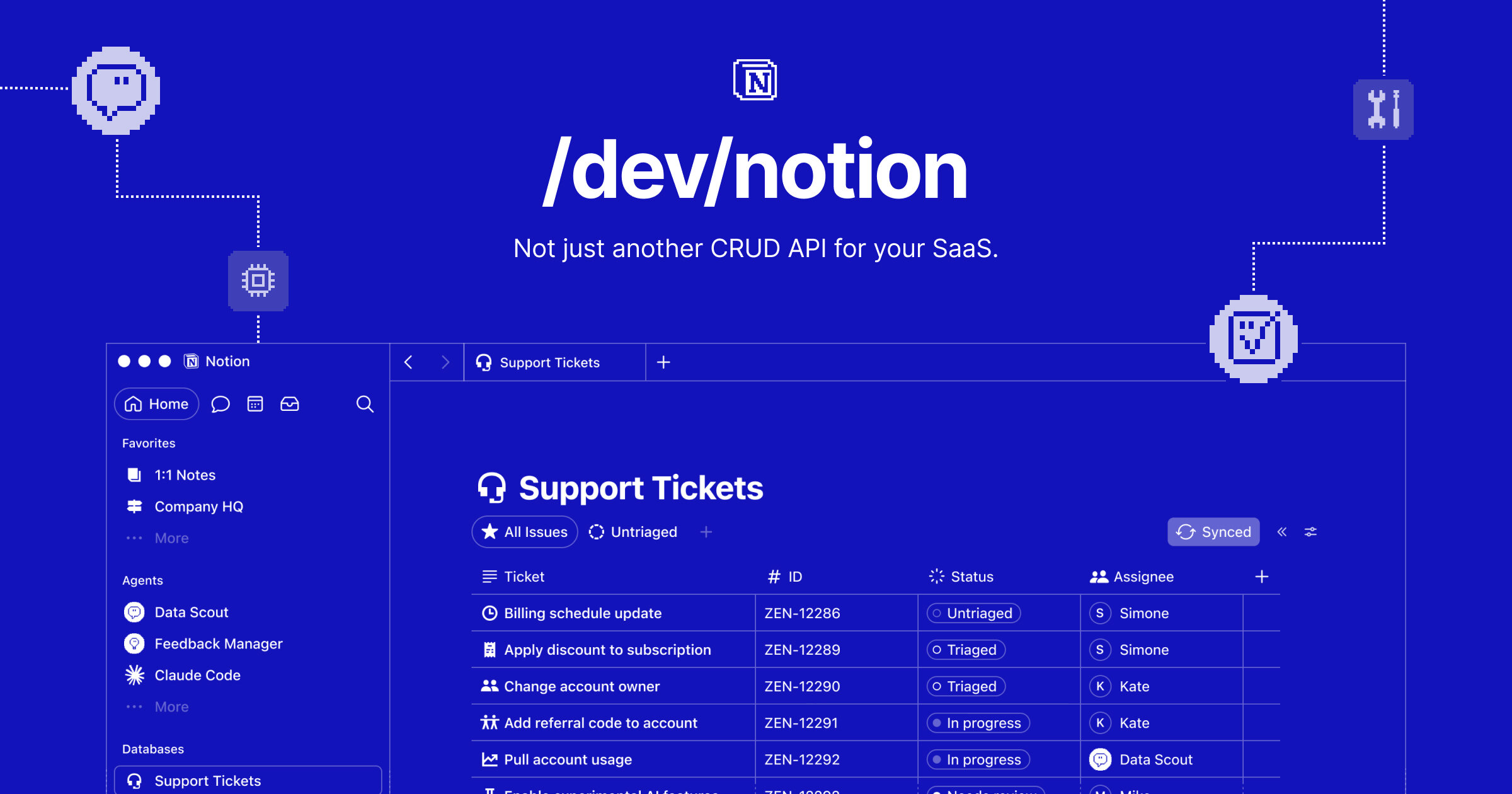
Notion announced on LinkedIn that teams can now add Cursor agents directly to their Notion task boards, treating AI as a teammate in the product development workflow. The integration allows developers to create purpose-built agents for fixing bugs, building features, and reviewing code, with every action staying visible and connected to the underlying work.
The move comes as Notion continues expanding its Developer Platform, which the company unveiled earlier this year to give developers and agents new capabilities beyond traditional CRUD APIs. By bringing Cursor, one of the most popular AI coding assistants, into its task management system, Notion is positioning itself as a central hub where human and AI contributors collaborate on equal footing.
Agents as Teammates, Not Just Tools
Unlike typical integrations that bolt AI onto existing workflows, Notion's approach embeds Cursor agents into the task board itself. Teams can assign tasks to these agents just as they would to human developers, with the AI handling everything from small bug fixes to larger feature implementations. Each Cursor run remains linked to its parent task, creating an audit trail that shows what the agent did, when, and why.
This level of transparency addresses a common concern with AI-assisted development: understanding what changed and who (or what) changed it. By keeping agent activity visible and reviewable within Notion, teams can maintain governance without sacrificing speed.

Building on Developer Platform Momentum
The Cursor integration leverages Notion's Developer Platform, which introduced Workers, custom tools, and declarative schemas for syncing external data. Developers can now write custom tools that Notion Agents use to query live data, generate assets, or hit any API, making the platform extensible beyond its core feature set.
Notion previously integrated the Cursor SDK to enable direct task delegation, and more recently added support for GLM 5.2 to handle long-horizon tasks. The latest update builds on that foundation by making agents first-class participants in project management, not just background automation.
What This Means for Product Teams
For small teams and builders, the integration could reduce context switching. Rather than jumping between Notion for planning, GitHub for code, and Cursor for AI assistance, developers can initiate and track AI-driven work from a single interface. Tasks stay organized, and the team sees progress in real time.
The emphasis on reviewability also matters for governance. If an agent introduces a bug or makes an unexpected change, the team can trace it back to the specific Cursor run and task. This becomes especially important as more teams adopt AI coding tools and need to maintain accountability.
Notion has not disclosed pricing details for the Cursor integration or whether it requires a specific plan tier. Teams interested in testing the feature can explore the Developer Platform documentation or watch the keynote video for implementation examples.
As AI coding assistants become standard tools in software development, platforms like Notion are racing to integrate them natively rather than relying on third-party connectors. By treating agents as teammates with visible, traceable contributions, Notion is making a bet that the future of product development is collaborative, not just automated.
Sources
1 checkedHow we cover tool news: Create With's tool desk drafts these reports with AI from the sources listed above and checks them against those sources before publishing.






 Stripe

 Supabase