 Claude
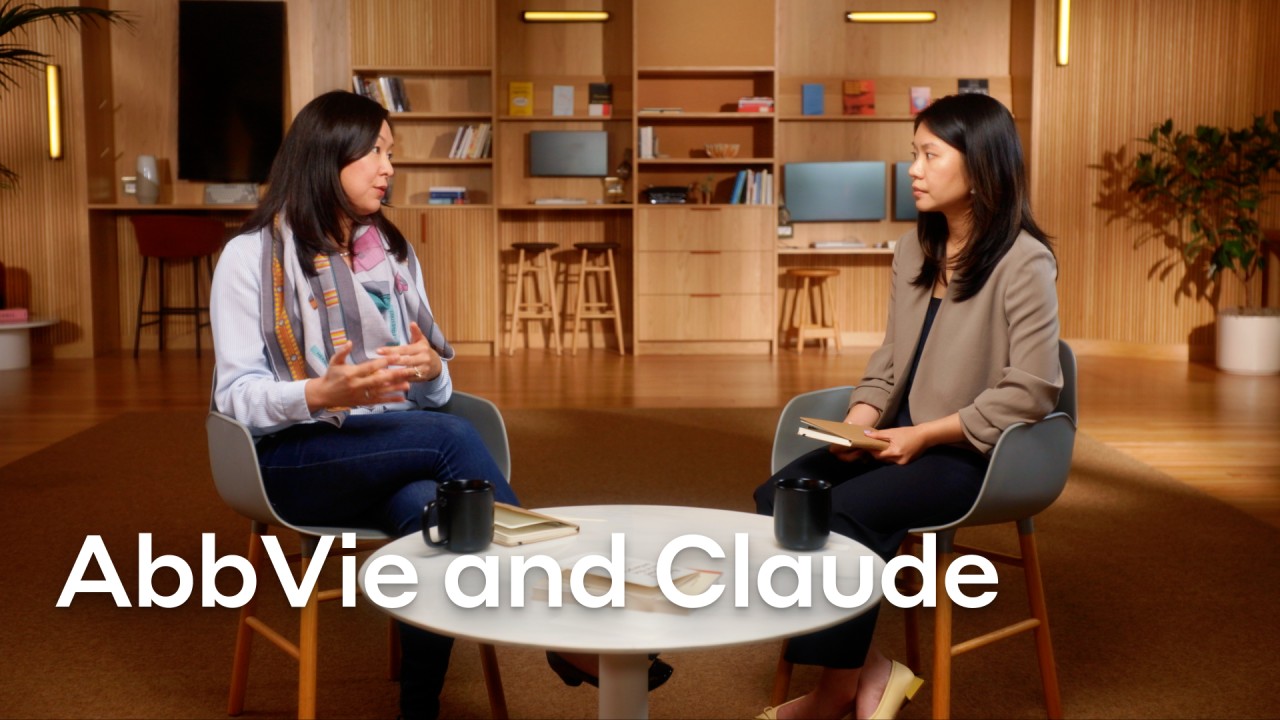
Claude is being deployed in pharmaceutical research and development at AbbVie, one of the world's largest biopharmaceutical companies, to accelerate drug discovery and improve clinical trial outcomes.
Sarah H. Nam, AbbVie's VP of AI Strategy and Partnerships, announced on LinkedIn that the company is using Claude for two core applications: analyzing multimodal data to understand human biology, and optimizing clinical trial design through better patient stratification and adaptive protocols.
Multimodal Analysis for Drug Discovery
Pharmaceutical R&D generates massive volumes of heterogeneous data, from genomic sequences and protein structures to clinical imaging and patient records. Claude's ability to process multiple data types simultaneously allows researchers at AbbVie to identify patterns and connections that might be missed when analyzing datasets in isolation.
This capability is particularly valuable in target identification and validation, where understanding the complex interplay between genetic variants, protein expression, and disease phenotypes can determine whether a potential drug target is viable. By synthesizing insights across modalities, Claude helps researchers make more informed decisions earlier in the development pipeline, potentially reducing the time and cost required to bring new therapies to market.
Smarter Clinical Trials
Clinical trial design is one of the most expensive and failure-prone phases of drug development. AbbVie is using Claude to improve patient stratification, the process of identifying which patients are most likely to respond to a treatment based on their genetic, molecular, and clinical characteristics.
Better stratification means trials can enroll more appropriate participants, increasing the likelihood of detecting meaningful treatment effects. Claude is also being applied to adaptive trial protocols, which allow researchers to modify study parameters based on interim results. This flexibility can make trials more efficient and ethical, as they can be stopped early if a treatment shows clear benefit or futility.
The announcement comes as Claude continues to expand its presence in specialized industries. Anthropic recently launched financial services features including an Excel add-in and real-time market data integration, and partnered with Iceland on a national AI education pilot.
Industry Implications
AbbVie's adoption of Claude reflects a broader shift in pharmaceutical R&D toward AI-assisted workflows. While the company has not disclosed the scale of its Claude deployment or specific drug programs benefiting from the technology, the emphasis on multimodal analysis and adaptive trials suggests a focus on precision medicine approaches.
The integration of large language models into pharmaceutical workflows raises questions about validation, reproducibility, and regulatory acceptance. Drug development is heavily regulated, and any AI-generated insights must ultimately be verified through rigorous experimental validation. However, AI tools like Claude can significantly accelerate the hypothesis generation and data synthesis phases, allowing human researchers to focus their efforts on the most promising leads.
Anthropic has published additional information about Claude's applications in life sciences on its website, targeting pharmaceutical companies, biotech startups, and academic research institutions looking to incorporate AI into their drug discovery pipelines.
Sources
1 checkedHow we cover tool news: Create With's tool desk drafts these reports with AI from the sources listed above and checks them against those sources before publishing.



 Stripe
 Supabase

 Airtable
 Adalo

 Squarespace
 ElevenLabs