 Xano
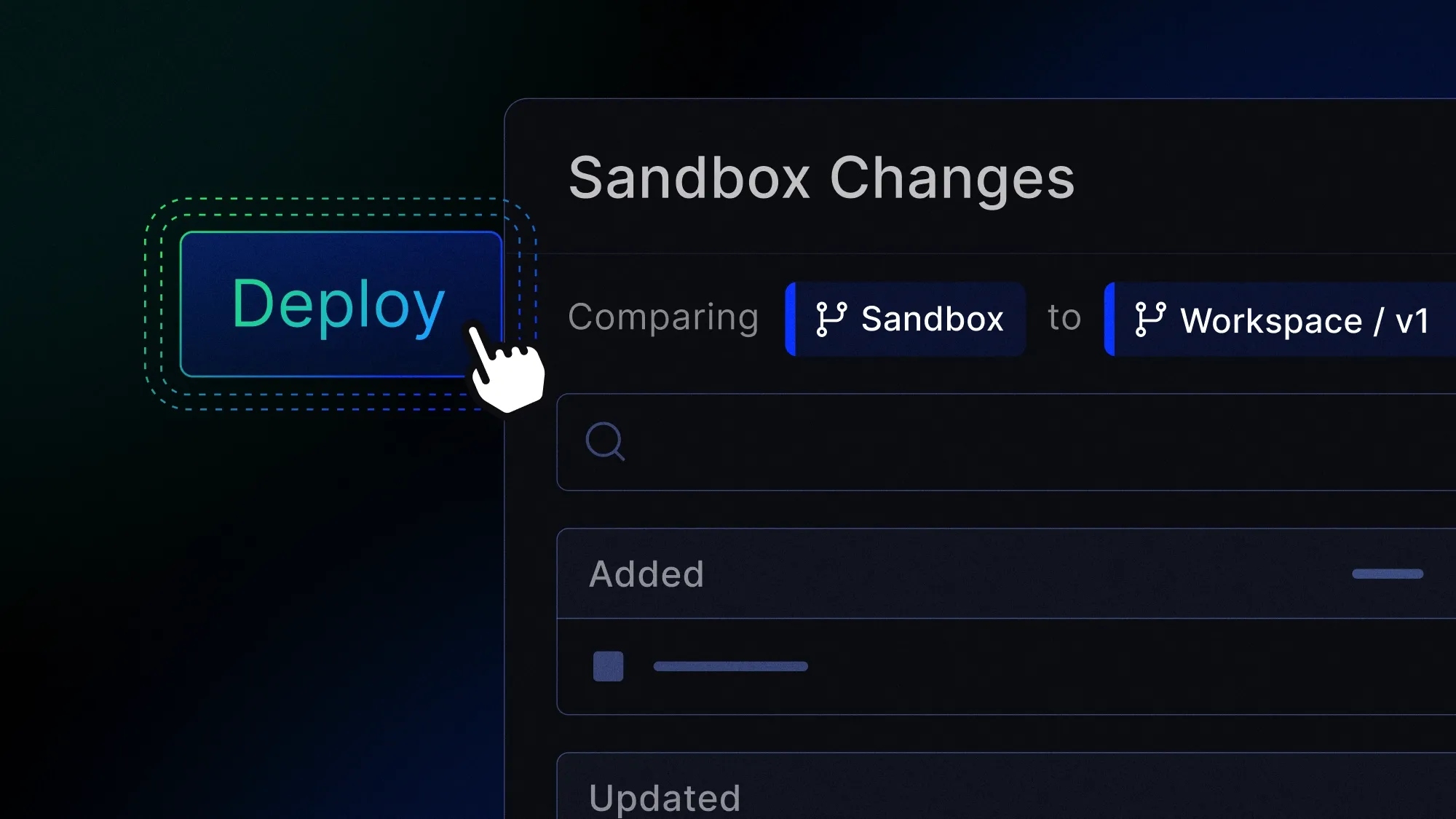
AI agents can now generate entire backends in minutes, but speed creates its own risk. The logic may be syntactically clean yet subtly wrong, implementing business rules that almost match requirements but miss critical edge cases. Traditional CI/CD workflows were built for human-written code, not for AI systems generating hundreds of lines in seconds.
Xano is addressing this with sandbox environments, now available in its CLI. The feature provides ephemeral, isolated environments where teams can validate AI-generated backend logic before it reaches development or production systems.
Testing AI Output Before It Ships
The sandbox workflow activates when developers run workspace push in the Xano CLI. Instead of pushing changes directly, the CLI prompts users to validate via sandbox first. Running xano sandbox push spins up an isolated environment mirroring the exact state of the workspace at push time. From there, xano sandbox review opens a visual interface where teams can inspect diffs, edit logic, and run live API calls against the sandbox environment.
This is not a static preview. The sandbox is a running backend instance where developers can trigger endpoints, inspect responses, validate edge cases, and confirm that generated logic behaves as intended. Only after validation can changes be promoted to the actual workspace.
The feature completes Xano's three-layer governance model for AI-generated code. As previously covered, the Xano Developer MCP and CLI already give AI agents rich context about workspaces and the ability to generate and push XanoScript. Sandboxes add the infrastructure layer needed to test that output in a real environment before deployment.
Where Sandboxes Fit in AI Code Governance
Xano's governance approach combines three elements: standardized patterns, visual validation, and agent-safe infrastructure. XanoScript channels AI output into enforced structures. Visual development provides a human-readable logic layer for reviewing what was built. Sandboxes provide the isolated testing ground.
The company frames this as solving the problem of failures that are harder to catch than syntax errors. AI-generated backends often implement logic that looks correct at first glance but diverges from business requirements in subtle ways. Because the code is clean and functional, these issues can slip past standard checkpoints.
Sandbox environments address this by giving teams a dedicated space to validate AI output against real execution paths. Developers can test endpoints, inspect database interactions, and confirm workflows before promoting changes. The ephemeral nature of sandboxes means each validation starts from a known state, reducing the risk of environmental drift or unintended dependencies.
Workflow Integration
The sandbox workflow integrates directly into the Xano CLI, which launched in version 2.3 alongside the Developer MCP. The CLI gives AI agents the ability to read workspace schema, generate XanoScript, and push changes. Sandboxes provide the validation step before those changes reach shared environments.
For teams using AI coding agents with tools like Cursor or Windsurf, the sandbox workflow adds a structural checkpoint. Agents can generate and push logic quickly, but human developers retain control over what gets promoted to development or production.
Xano positions sandboxes as infrastructure for AI-native development, where the bottleneck is not generating code but validating that the generated code does what it is supposed to do. The feature is available now to Xano users via the CLI.
Sources
1 checkedHow we cover tool news: Create With's tool desk drafts these reports with AI from the sources listed above and checks them against those sources before publishing.






 ElevenLabs

 Glide

 Stripe