 v0
v0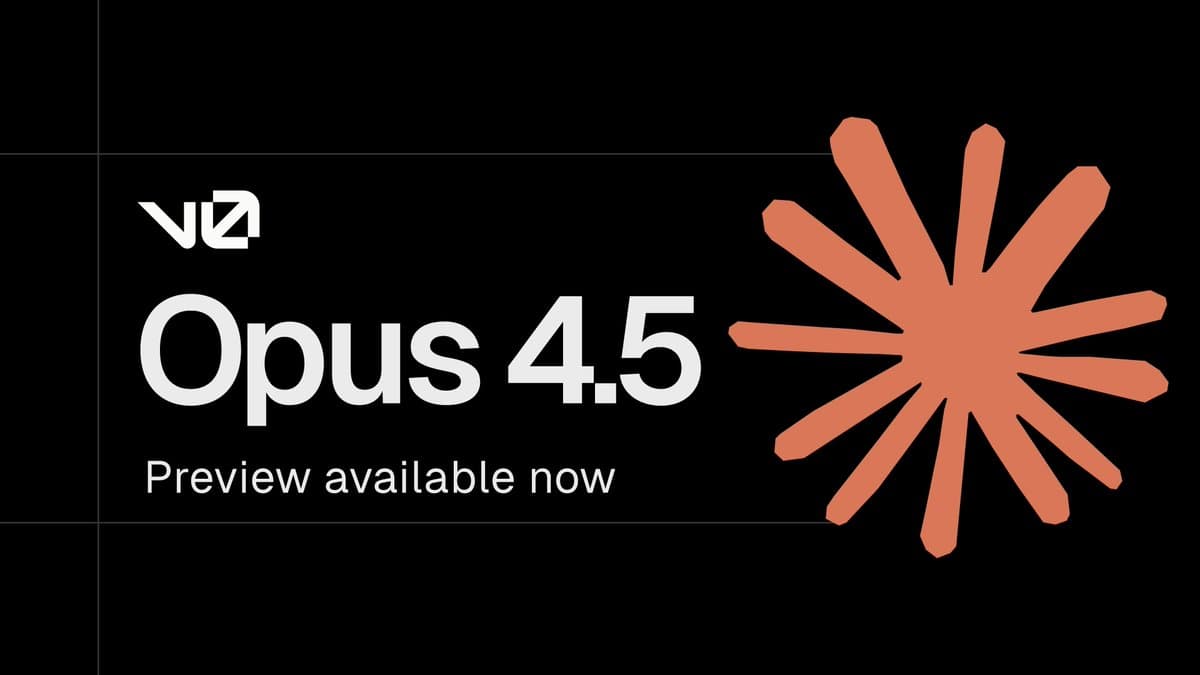
v0 has added Claude Opus 5 to its AI app-building platform, giving users another model option for generating interfaces, writing application code and working through more complex builds. The company announced the integration on LinkedIn, directing users to start trying the Anthropic model immediately.
The subsequent official changelog adds an important detail: Claude Opus 5 is available through v0’s model picker, and there is also an Opus 5 Fast tier intended to return responses more quickly. v0 has not published technical benchmarks or explained how the Fast tier differs from the standard option in model configuration, output quality or usage costs.
That leaves builders with two practical choices around the same model family. The standard version may be the first option to test for involved prompts, while the Fast tier is positioned for workflows where response time matters. Until v0 publishes comparative data, users will need to evaluate both against their own projects rather than assume one is better for every task.
Why Model Choice Matters in v0
v0, built by Vercel, turns natural-language instructions into working web applications that can be previewed, refined and published. It can also connect to GitHub repositories and integrate generated projects with external services and APIs.
Within that workflow, the selected model can influence how the system interprets requirements, maintains context across revisions and approaches implementation. A small landing page may not expose large differences. A multi-step product involving authentication, data handling, reusable components and responsive states offers a more meaningful test.
For small teams, the Claude Opus 5 addition is most relevant in tasks such as:
- Translating a long product brief into an initial application structure
- Revising several related components without losing earlier constraints
- Debugging generated code and explaining the proposed fix
- Planning integrations before modifying the project
- Iterating on a feature while preserving an existing visual system
The integration also broadens v0’s model strategy. The company previously added open-weight options, including Kimi K3, as Create With reported. Claude Opus 5 moves in a different direction, adding another proprietary model to the choices available inside the same building environment.
A Broader Update to the Building Workflow
Claude Opus 5 arrived alongside several workflow changes. v0’s July changelog says users can connect a Figma file so the platform reads its structure and styles directly, replacing the older import-and-screenshot process. When a prompt contains a Figma link, v0 now loads the relevant skill automatically.
The composer has gained prompt history through the Up and Down keys, including previous attachments and skills. Keyboard shortcuts can send prompts, interrupt active responses and move through queued requests. v0 also says it will decide how to implement AI functionality from an application’s requirements rather than stopping to ask the user how it should be built.
Together, those changes point toward a more continuous workflow: provide requirements and source material, choose a model, generate the application, then iterate without repeatedly reconstructing context. The new model also complements v0’s expansion beyond its own interface. Its API already opens app generation to agents and automated workflows, while a newer usage dashboard provides more granular visibility into AI costs.
The open question is whether Claude Opus 5 materially improves real projects compared with v0’s existing models. The announcement provides availability, not evidence of better output. Builders assessing it should use the same prompt and project state across models, then compare correctness, visual fidelity, unnecessary code changes and the number of follow-up turns required.
Frequently asked questions
What is Claude Opus 5 in v0?
Claude Opus 5 is an Anthropic AI model that can now be selected inside v0 for app-building conversations. v0 also offers an Opus 5 Fast tier designed to provide faster responses.
Who should try Claude Opus 5 in v0?
It is available to builders using v0 to create and revise web applications through prompts. It may be particularly relevant for projects with detailed requirements, multiple components or longer iterative conversations, although v0 has not published comparative performance benchmarks.
Which v0 plan includes Claude Opus 5?
The supplied announcement and changelog confirm availability in the model picker but do not specify plan restrictions, pricing or credit consumption. Users should check the model picker and current account details before starting a cost-sensitive build.
Sources
1 checkedHow we cover tool news: Create With's tool desk drafts these reports with AI from the sources listed above and checks them against those sources before publishing.



 PostHog
 Vercel

 ElevenLabs