 v0
v0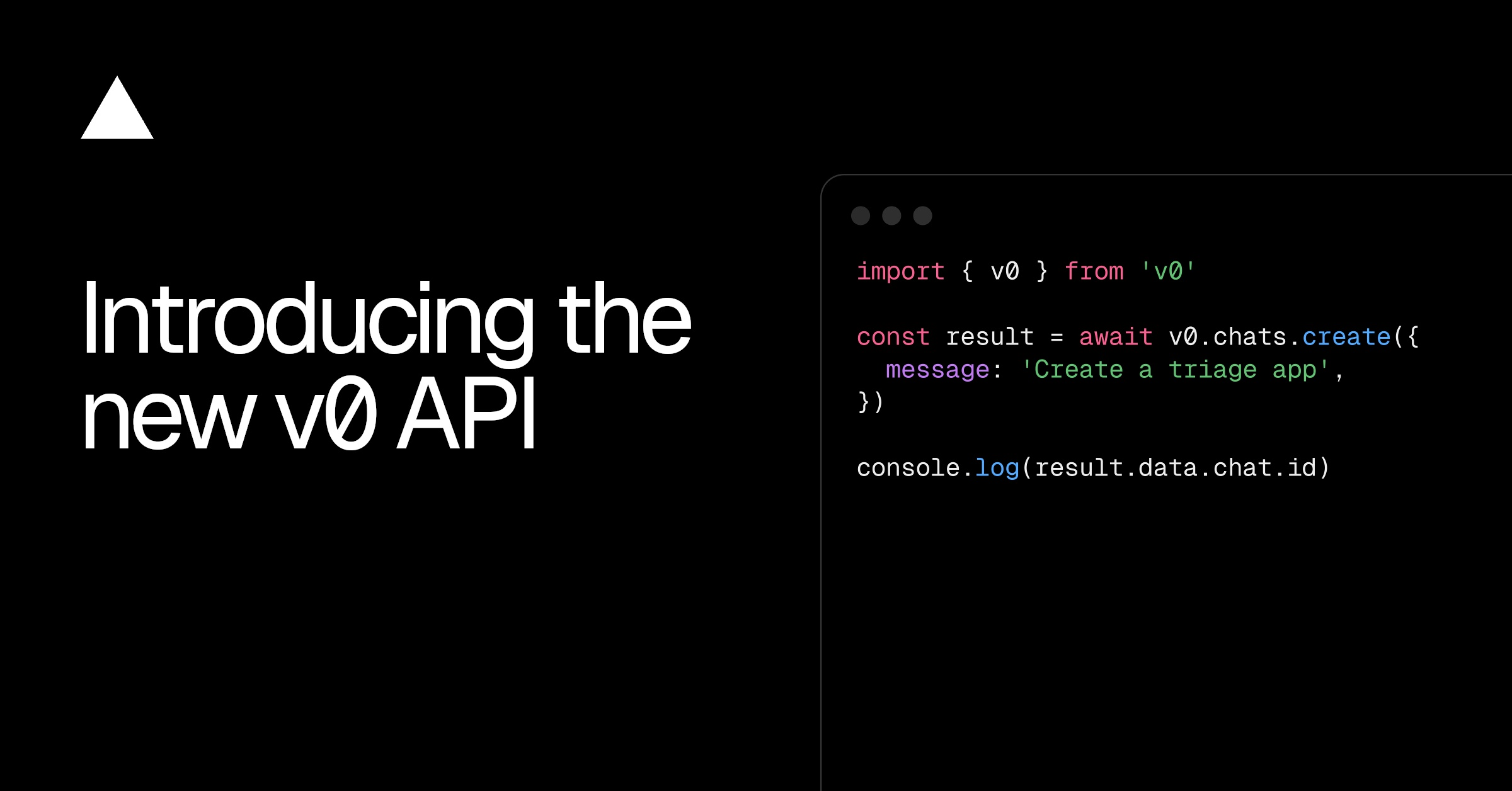
v0 is turning its AI app builder into infrastructure. The new v0 API gives developers programmatic access to the same app-generation agent that powers its web product, making it possible to generate, run and revise applications without sending users through the standard v0 interface.
The API is generally available as of August 5, 2026, according to the official announcement. In a separate LinkedIn post, the company highlighted three intended uses: shipping custom app builders, enabling agents to build and deploy apps, and generating applications from scripts or continuous integration jobs.
That represents a meaningful shift for v0. Instead of operating only as a destination where people describe and refine an app, the product can now sit behind another interface, agent or automated workflow.
How the v0 API works
Developers begin by creating a chat and sending a prompt. v0 generates the application, starts a development server inside a Vercel Sandbox, and returns a preview URL. That URL can be embedded in a developer’s own product, allowing end users to see the generated app without opening v0 separately.
Each chat functions as an isolated workspace for a single application. Within that workspace, v0 can read, edit and run the project’s files. Follow-up messages continue from the current state rather than rebuilding the application from scratch, which gives developers a conversational editing loop they can expose through their own software.
The agent also verifies the code running inside the Sandbox. According to Vercel, this allows v0 to identify and fix errors in real time, an important distinction from APIs that only return a block of generated code and leave execution, testing and recovery to the integrating product.
The core workflow can be summarized as:
- Send a natural-language app request programmatically.
- Receive a generated application running in an isolated workspace.
- Display the resulting preview URL inside another interface.
- Submit follow-up instructions to revise the existing project.
- Let v0 run and check the updated code in its Sandbox environment.
Because the interface is headless, businesses can place their own onboarding, permissions and domain-specific prompts around this process. A software consultancy could create an internal prototype generator, for example, while a vertical SaaS provider could let customers generate narrowly defined tools from within its existing dashboard.
Why programmatic access matters
The more consequential use case may be agent-driven development. An autonomous agent can now hand a specification to v0, receive a working preview and continue requesting changes based on the application’s state. The launch announcement also says agents can use the API to build and deploy apps, although the published overview does not detail deployment controls or approval steps.
Scripts and CI jobs offer another route. Teams could trigger generation as part of a repeatable internal process rather than relying on an employee to open a chat and enter prompts manually. For small businesses, that could reduce the work involved in producing prototypes, campaign microsites or internal interfaces, provided the generated applications still go through appropriate review and testing.
The API arrives as v0 expands beyond prompt-to-interface generation. Its July changelog added direct Figma inspection and automatic decisions about how to implement AI features. It has also been developing more structured design-system support, including multi-source imports and usage intelligence. Programmatic access gives other products a way to build on those broader app-generation capabilities rather than merely linking users out to v0.
The announcement does not specify API pricing, rate limits or which paid plans may be required. Those details will determine whether the API is best suited to occasional internal automation or customer-facing products generating applications at scale.
Frequently asked questions
What is v0 API?
v0 API is a programmatic, headless interface to v0’s app-building agent. It accepts prompts, generates and runs an application in an isolated Vercel Sandbox, and returns a preview URL that developers can embed in their own products.
When is v0 API available?
The new API became generally available on August 5, 2026. It is intended for production use cases including custom app builders, agent workflows, scripts and CI jobs.
How much does v0 API cost?
The launch announcement does not provide API pricing, included usage or plan requirements. Developers should consult the v0 API documentation and current account information before designing a production workflow around it.
Sources
1 checkedHow we cover tool news: Create With's tool desk drafts these reports with AI from the sources listed above and checks them against those sources before publishing.


 PostHog
 Vercel

 ElevenLabs