 PostHog
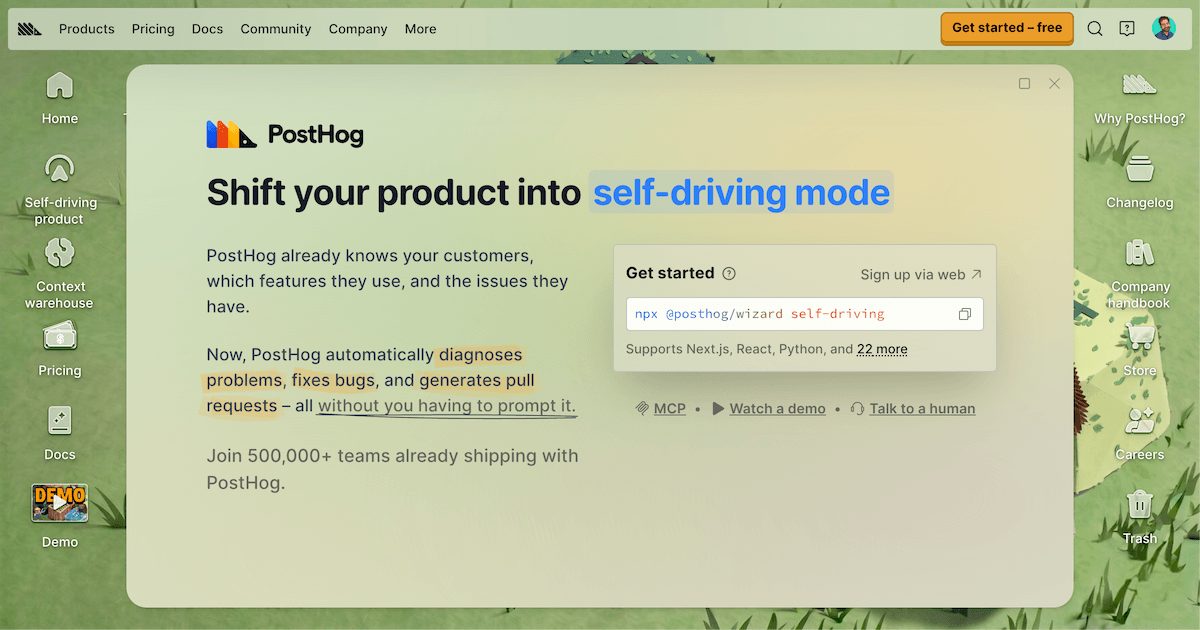
PostHog has removed the waitlist for PostHog Desktop, opening the analytics application to immediate downloads while adding collaborative workspaces, generated data visualizations and workflows that can propose changes to a product’s codebase.
The update, announced on LinkedIn, represents a broader push to turn PostHog from a place where teams inspect product data into software that can identify and help resolve problems. The newly public desktop app includes multiplayer spaces, generative UI canvases, proactive implementation of feature flags and experiments, and a self-driving inbox that groups detected issues and opens pull requests for review.
That is a more ambitious role than a conventional analytics dashboard. Rather than requiring a product manager or developer to move manually between charts, issue trackers and a code editor, PostHog Desktop is being positioned as a workspace that can connect analysis to implementation.
From Shared Analysis to Product Changes
Multiplayer spaces provide a shared environment for teams working with the same product context. PostHog did not detail the underlying collaboration mechanics in the announcement, but the framing suggests users can investigate data together rather than passing links and screenshots between separate sessions.
Generative UI canvases address another persistent analytics problem: deciding how to present a question before the data can be understood. The desktop app can generate visual interfaces for exploring and displaying product data, potentially reducing the setup required for one-off dashboards or investigations. This builds on PostHog’s work on a semantic layer that centralizes business metrics, which gives both people and automated systems a shared definition of concepts such as active users or revenue.
The more consequential additions are the app’s implementation capabilities. PostHog says Desktop can proactively implement feature flags and experiments, two tasks that normally involve configuring analytics and changing application code. The announcement does not specify which repositories, development environments or SDKs are supported, nor how much of the implementation happens automatically.
For small teams, the practical value could be fewer handoffs. A founder could identify a conversion problem, define an experiment and receive a proposed implementation without translating the entire task into a developer ticket. Teams should still inspect generated changes, particularly when flags affect access, billing or critical user flows.
A Self-Driving Inbox That Produces Pull Requests
PostHog Desktop’s self-driving inbox clusters issues that PostHog finds in a product. Instead of presenting every anomaly or problem as an isolated notification, it groups related findings and can open pull requests for the team to review.
The review step matters. Pull requests provide a familiar checkpoint where developers can inspect code, run tests and reject unsuitable changes before they reach production. PostHog has separately been developing automation around code review, including ReviewHog for automated pull request reviews, making the desktop release part of a wider effort to connect product intelligence with engineering workflows.
The model also changes the purpose of an analytics inbox. It is no longer only a queue of charts or alerts. In PostHog’s version, an item can become a proposed fix.
PostHog’s recent changelog points in the same direction. AI observability anomalies can appear as self-driving investigations, while analytics answers sent to Slack can include charts, an update Create With previously covered. Desktop brings those strands into a dedicated application where analysis, collaboration and action can happen in one place.
Important details remain unanswered. The announcement does not state which operating systems are supported, whether every feature is available to all accounts, or whether specific paid plans are required. It also does not describe repository permissions, data handling or administrative controls for automated pull requests. Prospective users should verify those details before connecting production analytics and source code.
What is clear is the change in availability. PostHog Desktop is no longer gated by a waitlist, so teams can download it now and evaluate whether its agent-like workflows fit their development process.
Frequently asked questions
What is PostHog Desktop?
PostHog Desktop is a downloadable application for working with PostHog product data. It combines collaborative spaces and generated visualization canvases with workflows that can help implement feature flags, set up experiments and propose code changes through pull requests.
What does the self-driving inbox do?
The self-driving inbox groups issues that PostHog detects in a product, reducing a stream of separate findings into related clusters. It can then open pull requests containing proposed changes for a team to review.
Is PostHog Desktop available without a waitlist?
Yes. PostHog said on August 25, 2026 that it had lifted the waitlist and made the desktop app available to download. The announcement did not provide plan requirements, operating-system compatibility or separate pricing details.
Sources
1 checkedHow we cover tool news: Create With's tool desk drafts these reports with AI from the sources listed above and checks them against those sources before publishing.


 Stripe

 Airtable
 Adalo

 Squarespace

 ElevenLabs