Skip to content
All tool news

Tool desk · Updated daily

Tool news·Notion·

Notion Rolls Out Three GPT-5.6 Models for Speed, Cost, and Multi-Day Tasks.

Notion adds GPT-5.6 Sol, Terra, and Luna models, offering multi-day agents, cost savings, and faster performance for custom agents.

CW

Create With tool desk

1 source checked · 2 min read · 3 sections

ShareLinkedIn
Notion Rolls Out Three GPT-5.6 Models for Speed, Cost, and Multi-Day Tasks

Notion announced on LinkedIn the addition of three GPT-5.6 models to its platform, giving teams new options across performance, cost, and task complexity. The models—Sol, Terra, and Luna—target different workloads, from extended multi-day operations to high-speed responses for lightweight tasks.

Sol, Terra, and Luna Address Different Use Cases

GPT-5.6 Sol is designed for long-duration tasks and self-improving agents. Notion positions it for workflows that span days, where agents refine their approach iteratively. GPT-5.6 Terra runs existing GPT-5.5 workloads at roughly half the cost, making it the cost-optimized choice for teams managing volume.

GPT-5.6 Luna focuses on speed for smaller tasks and is currently available for Custom Agents. Custom Agents, recently expanded with worker sharing, allow developers to build task-specific tools that connect to live data and external APIs. Luna's responsiveness fits scenarios where quick turnarounds matter—data lookups, inline suggestions, or rapid prototyping.

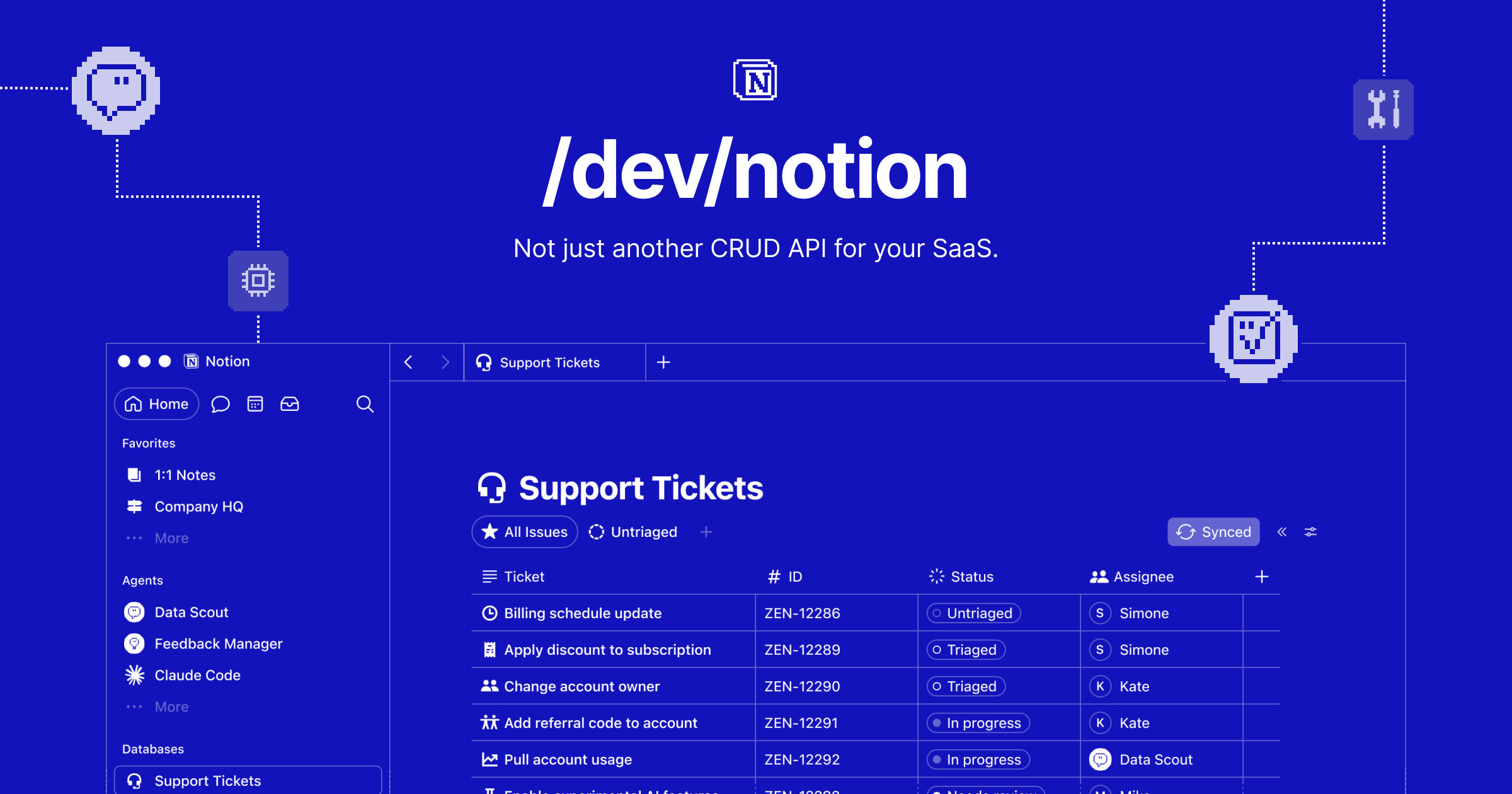
Notion developer platform interface

The three-model approach mirrors patterns from other platforms offering tiered AI access. Anthropic's Claude and OpenAI's ChatGPT both provide multiple model options, letting users balance cost, latency, and capability depending on the job.

Building on Recent Platform Momentum

Notion's model expansion follows its Developer Platform launch, which introduced Workers for syncing external data sources, custom agent tooling, and declarative schemas. The platform aims to position Notion as more than a document workspace, turning it into a programmable layer for business workflows.

The company has added several new models over recent months, including Grok 4.5 and Kimi K2.7 Code for in-app coding assistance. The GPT-5.6 additions continue that cadence, offering teams more granular control over how AI fits into their processes.

Key capabilities across the GPT-5.6 models:

  • Sol: Multi-day task execution, iterative agent refinement
  • Terra: Cost reduction for existing GPT-5.5 workloads
  • Luna: High-speed responses for small tasks, available in Custom Agents

Notion has not disclosed pricing details for the new models or whether they will eventually replace older options. Terra's cost positioning suggests Notion is optimizing for teams running high-volume operations where per-query expenses add up.

What It Means for Teams Using Notion

The three-model structure gives Notion users a practical way to match task type to model performance. Teams building agents that query databases, generate documents, or orchestrate multi-step workflows now have more levers to pull—whether they need extended reasoning, budget efficiency, or sub-second responses.

For developers working with Notion's Custom Agents, Luna's speed advantage could improve real-time interactions. If an agent is surfacing live data or providing inline feedback, latency matters. Terra, meanwhile, offers an immediate path to cost savings for teams already running GPT-5.5-based workflows at scale.

As Notion continues expanding its AI capabilities, the platform is shifting from being a place where teams store information to a layer where that information drives automated work. The GPT-5.6 rollout extends that vision, giving builders more tools to define how AI operates inside their workspace.

Sources

1 checked

How we cover tool news: Create With's tool desk drafts these reports with AI from the sources listed above and checks them against those sources before publishing.

Worth passing on?

ShareLinkedIn

Go deeper on Notion

Related reading, watching and going.

Everything on Notion →

The briefing

19 May 2026

How to Migrate Your App from Lovable to Claude Code in 2025

Step-by-step guide to migrating your Lovable app to Claude Code. Learn how to move from Lovable's managed platform to a stack you own and control.

Read →

The briefing

31 Mar 2026

Vibe Marketing Review: Can AI Agents Really Automate Marketing?

An honest review of vibe marketing with AI agents. Learn if automated marketing actually works for solo founders and small teams. Plus: Claude Code leak, Factory Missions.

Read →

The briefing

3 Mar 2026

Perplexity Computer Platform & Notion AI Agents Review 2025

Perplexity's 19-model AI platform, Claude Code mobile control, iPhone offline AI with Qwen 3.5, and Notion's custom agents are transforming AI automation.

Read →
39 min

Conference

The Biggest AI Opportunities for Non-Technical Builders in 2026

A closing panel discussion from Create With featuring leaders from Glide, Softr, Bubble, Momen, and TechFoundHer examining how AI and no-code platforms are democratizing software development. The panelists explore what non-technical builders can now create, how AI is transforming service businesses, and where expertise still matters when prototypes become production applications.

Watch now ↗
31 min

Conference

How to Get Your Product Recommended by Google and ChatGPT

Tanya Van Gastel presents the APEX framework for making products discoverable in AI-powered search engines like ChatGPT and Google's AI Overviews. She explains how AI is fundamentally changing product discovery and buyer behavior, then breaks down five critical components: Authority (being cited as a solution), Presence (visibility across search platforms), Expertise (creating high-quality money pages), Endorsements (off-site validation), and Extractability (making content easy for AI to process). The talk emphasizes quality over quantity, with data showing 50% of SaaS SEO revenue comes from fewer than 10 high-performing pages.

Watch now ↗
55 min

Tutorial

I Built a Personal AI Assistant for £10/month — Here's How To Do The Same

Tanveer Mohammed provides a comprehensive tutorial on building a personal AI assistant using OpenClaw for approximately £10/month. The walkthrough covers VPS setup on Hostinger, API configuration through OpenRouter, app integration via Composio, Telegram setup, skill creation, cron job scheduling, and real-world applications including health tracking, trading alerts, and business management.

Watch now ↗

Latest tool news

What else changed this week.

All tool news
VercelDigest

What Vercel Shipped in Late October

Vercel shipped quicker static deployments, four AI Gateway models, more free domain choices and new CLI controls in late October. The changes cover developers testing sites…

Vercel

Vercel Adds Submit_feedback to Its MCP

submitfeedback is a new Vercel MCP tool that lets agents and harnesses send bug reports, friction reports and feature requests directly to the Vercel team. Feedback can include…

The Create With Briefing

Don't watch forty changelogs. Read one email.

Every Tuesday: the tool changes worth knowing, real business use cases, and what's on near you. Free, unsubscribe any time.








