 ElevenLabs
ElevenLabs is opening its latest AI dubbing model to developers. Dubbing v2 is now available through ElevenAPI, allowing companies to embed multilingual dubbing into their own products, internal systems, and automated content workflows.
The company announced the API release on LinkedIn, alongside model improvements focused on locale accuracy, regional accents, and background audio. The move turns an existing production capability into infrastructure that developers can build around, rather than a feature that must be operated solely through ElevenLabs’ own interface.
That distinction matters for businesses producing localized video at scale. A media platform could add dubbing to its upload flow, for example, while an education company could connect translated audio generation to its course publishing system. Agencies and internal content teams could also use the API as one stage in a broader automation, passing source media into ElevenLabs and then moving completed assets into review or distribution systems.
Better Localization, Not Just Translation
Dubbing involves more than translating dialogue and generating a new voice track. A usable result must account for how a language is spoken in a particular market, preserve the character of the speaker, and avoid damaging music, ambient sound, or other non-speech elements in the source recording.
ElevenLabs says Dubbing v2 improves three areas:
- Locale accuracy, intended to produce output better matched to the target country or language variant.
- Regional accents, making dubbed voices more representative of how people speak in specific regions.
- Background audio handling, which should help preserve the wider soundscape around translated speech.
The announcement does not provide benchmarks or direct comparisons showing the size of those gains. Developers evaluating the update will therefore need to test it against their own material, particularly recordings with overlapping speakers, strong accents, music, or noisy environments.
Regional accuracy can be commercially important. Spanish intended for audiences in Spain may require different pronunciation and language choices from Spanish content made for Mexico or Argentina. Similar distinctions apply across English, French, Portuguese, and other languages used in multiple markets. More precise locale handling could reduce the manual corrections needed before a dubbed asset is published, although ElevenLabs has not claimed that review is no longer necessary.
The API availability follows the broader release of the model, which Create With previously covered alongside Music v2 and Ads Engine. This latest step is specifically about programmability. It gives product teams a route to make dubbing part of a repeatable process, rather than treating each video or audio file as an isolated production job.
What Developers Should Check
ElevenLabs maintains a developer changelog and separate ElevenAPI documentation, but the supplied announcement does not specify new endpoint names, supported locale combinations, processing limits, or pricing changes for Dubbing v2. Teams should verify those details in the current documentation before planning a production rollout.
A sensible evaluation would compare Dubbing v2 output across several representative files, not just a clean studio recording. Businesses should test target locales, regional accents, background music, ambient noise, and content with multiple speakers. Human review also remains relevant for names, specialist terminology, brand language, and culturally sensitive phrasing.
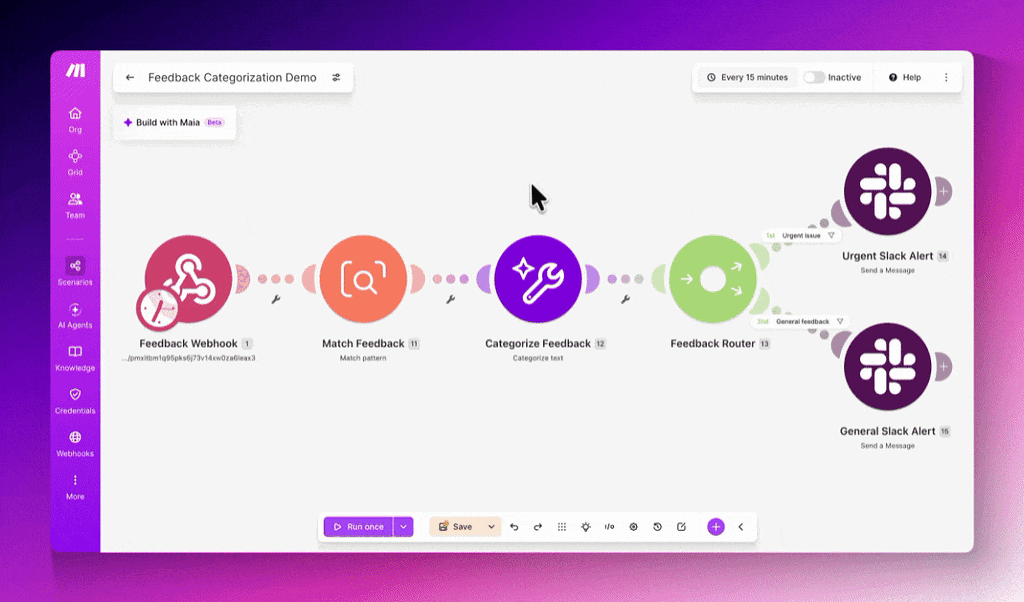
For small businesses and no-code builders, the API release also creates the possibility of connecting dubbing to automation platforms through HTTP requests or a custom integration. The announcement, however, does not identify any native connectors or prebuilt no-code templates. Implementations may still require a developer or an automation tool capable of working with authenticated APIs and media files.
Frequently asked questions
What is ElevenLabs Dubbing v2?
ElevenLabs Dubbing v2 is an AI dubbing model that converts spoken content for other languages and locales while accounting for voices and surrounding audio. It is now available through ElevenAPI, so developers can incorporate dubbing into their own applications and workflows.
What improved in Dubbing v2?
ElevenLabs says the model offers sharper locale accuracy, more accurate regional accents, and better handling of background audio. The company did not publish comparative benchmarks with the announcement, so teams should test the changes using their own source material.
How much does Dubbing v2 through ElevenAPI cost?
The announcement did not state pricing or identify a required plan. Developers should consult ElevenLabs’ current API pricing and documentation for usage costs, limits, supported languages, and implementation requirements.
Sources
1 checkedHow we cover tool news: Create With's tool desk drafts these reports with AI from the sources listed above and checks them against those sources before publishing.



 Notion