 Claude
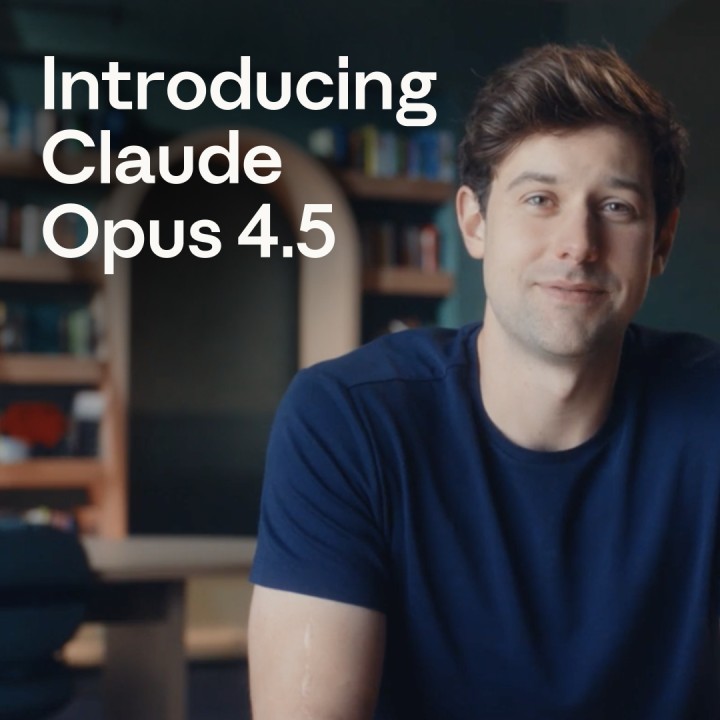
Anthropic has released Claude Opus 4.5, positioning the model as the most capable system available for coding, agentic workflows, and computer use. The company announced the launch alongside a suite of product updates designed to extend how long Claude can work autonomously and expand access to existing features across subscription tiers.
Opus 4.5 arrives as competition intensifies among frontier AI labs. Anthropic claims the model represents "a step forward in what AI systems can do," though the company has not yet published independent benchmarks comparing Opus 4.5 to recent releases from OpenAI, Google, or Gemini. The model is available immediately through Anthropic's API and on Amazon Bedrock, Google Cloud's Vertex AI, and Microsoft Foundry.
Unlimited Conversations Through Automatic Summarization
The most visible change for users is the removal of conversation length limits in the Claude app. Previously, extended chats would eventually hit a context window ceiling, forcing users to start new threads. Claude now summarizes earlier portions of a conversation as needed, allowing indefinite continuation of a single chat.
This approach differs from simply expanding the context window, a strategy pursued by competitors like ChatGPT. By compressing earlier messages into summaries, Anthropic reduces token consumption while maintaining conversational coherence, a design choice that aligns with their recent focus on long-running agents.
Developer Platform Gains Tool Search and Effort Control
On the API side, Anthropic has shipped several features aimed at reducing the overhead required to manage complex agentic workflows. The platform now supports tool search, programmatic tool calling, and tool use examples. These join previously released capabilities like effort control and context compaction.
Tool search allows Claude to identify relevant functions from a large set of available tools without requiring developers to manually filter options. Programmatic tool calling enables dynamic invocation of external APIs based on task requirements. Together, the features aim to let Claude "run longer and do more, with less intervention," according to the company.
For developers building multi-step automations with platforms like Make, n8n, or Zapier, these improvements could reduce the number of human checkpoints required in workflows that previously needed frequent supervision.
Claude Code Expands to Desktop, Plan Mode Gets Smarter
Claude Code, the company's coding assistant, is now available in the desktop app with support for multiple parallel sessions. This puts it in more direct competition with tools like Cursor, Windsurf, and Replit, which have built dedicated interfaces for AI-assisted development.
Plan Mode, which allows users to describe a task for Claude to execute autonomously, now runs on Opus 4.5. The updated version asks clarifying questions upfront before beginning work, a change designed to reduce mid-task interruptions and course corrections. This mirrors patterns seen in tools like v0 and Lovable, which front-load user input to minimize back-and-forth during generation.
Chrome and Excel Extensions Reach More Users
Anthropic has expanded access to Claude for Chrome and Claude for Excel. The Chrome extension, which allows users to invoke Claude from any web page, is now available to all Max subscribers, up from a limited release. Claude for Excel, which embeds the model directly in spreadsheet workflows, now extends to Max, Team, and Enterprise tiers.
For small business owners working in Airtable, Google Forms, or other data tools, the Excel integration offers a native alternative to building custom integrations through Buildship or Supabase.
Enterprise Momentum Continues
The release follows a period of rapid growth for Anthropic. The company recently reported 9× revenue growth driven by enterprise adoption in Europe, and Claude Code alone has reached $1 billion in run-rate revenue following the acquisition of Bun.
Opus 4.5 and the accompanying platform updates suggest Anthropic is betting that enterprises will pay for systems that can operate with less supervision across longer time horizons. Whether that claim holds up in production workloads, particularly against OpenClaw and other emerging agent frameworks, will depend on how well the model handles edge cases outside controlled environments.
Developers can access Opus 4.5 through the Anthropic API or major cloud platforms starting today. Pricing details for the new model have not yet been disclosed.
Sources
1 checkedHow we cover tool news: Create With's tool desk drafts these reports with AI from the sources listed above and checks them against those sources before publishing.



 Stripe

 Supabase

 Airtable
 Adalo
 Squarespace
 ElevenLabs