
Skip to content
All tool news

Tool desk · Updated daily

Tool news·ChatGPT·

ChatGPT's Reasoning Models Move Beyond Chat to Power Scientific Research.

OpenAI's frontier reasoning models are evolving into practical tools for scientists, enabling complex physics simulations and automated workflows.

CW

Create With tool desk

1 source checked · 2 min read · 3 sections

ShareLinkedIn
ChatGPT's Reasoning Models Move Beyond Chat to Power Scientific Research

OpenAI's o1 Model Demonstrates Scientific Reasoning Capabilities

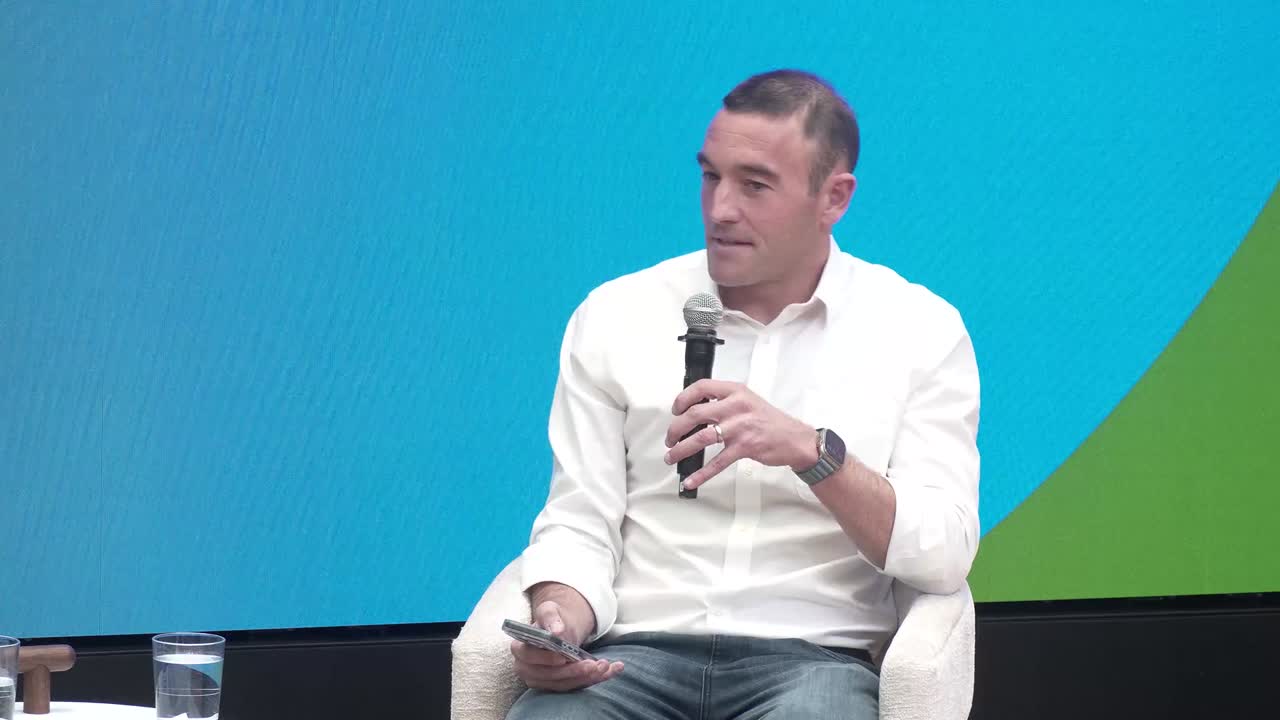
At this week's OpenAI Forum, Kevin Weil sat down with Brian Spears from Lawrence Livermore National Laboratory to discuss how frontier reasoning models are transitioning from conversational interfaces to specialized tools for working scientists. Spears, who leads simulation work on the Department of Energy's Genesis Mission, shared details about using o1 to accelerate complex physics research.

The conversation highlighted a shift in how AI models support scientific work. Rather than simply answering questions, these systems can now reason through multi-step problems using domain-specific language and methods.

Spears described his "o1 moment" working on shock physics: starting from a one-megabar shock hitting stainless steel, the model progressed from explaining underlying physics to writing the core conservation equations used in real simulations. It then referenced a complex radiation-hydrodynamics system at his lab, a tool that typically requires years of training to master.

"The breakthrough was the model's ability to reason over complex subject matter in the same language scientists use," Spears explained during the forum.

Combining Reasoning with Execution

The discussion moved beyond single-shot problem solving to what becomes possible when reasoning models connect with execution environments. Spears outlined several practical applications already in use:

Iterative analysis that converges on better starting points for expensive high-performance computing runs, reducing wasted compute cycles on parameter combinations unlikely to yield useful results.

Agent-style workflows that set up simulations, plan large parameter sweeps, and automate post-processing tasks that previously required manual intervention at each stage.

Critically, these workflows maintain human oversight for verification and high-consequence judgment calls. The models handle routine setup and exploration, flagging results that require expert review.

This approach mirrors patterns emerging in other domains. Following OpenAI's recent launch of the Prism paper review workflow, the company has emphasized tools that augment rather than replace expert judgment in technical fields.

Implications for Fusion Research and Scientific Computing

The Genesis Mission provides a compelling test case for these capabilities. The DOE initiative aims to accelerate discovery by building platform approaches to scientific computing, an area where automation of routine tasks can free researchers to focus on novel problems.

Spears connected the discussion to recent fusion milestones, noting how faster iteration on simulation parameters could compress development cycles for complex systems. In fusion research, where experimental validation is expensive and time-consuming, high-fidelity simulations serve as a critical bridge between theory and practice.

The conversation also touched on broader adoption challenges. Scientific computing environments often involve legacy code, specialized hardware, and institutional security requirements that complicate integration of new tools. Making reasoning models genuinely useful in these contexts requires more than raw capability; it demands understanding of existing workflows and constraints.

OpenAI has positioned these developments as part of a longer-term vision for AI in science, building on its $122 billion funding round earlier this year to develop more specialized applications beyond general-purpose chat.

For now, the emphasis remains on tools that work alongside scientists rather than replacing their expertise. As Spears demonstrated, the value lies not in automating final decisions but in accelerating the exploratory work that leads to better questions and more targeted experiments.

Sources

1 checked

How we cover tool news: Create With's tool desk drafts these reports with AI from the sources listed above and checks them against those sources before publishing.

Worth passing on?

ShareLinkedIn

Go deeper on ChatGPT

Related reading, watching and going.

Everything on ChatGPT →

The briefing

21 Oct 2026

Stop Asking AI — Build Reusable Scripts to Save Tokens

Discover why asking AI to write small reusable scripts — not one-off replies — saves tokens, improves accuracy and privacy, and makes tools easy to reuse.

Read →

The briefing

13 Oct 2026

Jev - The System One AI That Never Writes a Word, Explained

Deep dive into Jev - TypeSafe's 'System One' model that outputs decisions, not text. Read how it works, real demos (driving), what it's good for and its limits.

Read →

The briefing

30 Sept 2026

Solo Consultant's AI Operating System Built on Markdown

London solo consultant uses an AI personal OS of markdown files—saving ~45% delivery time, boosting revenue 2.4×, and powering 33 community events for ~£250/mo.

Read →
36 min

Podcast

55. We're Back! Conference Recap, Running Events with AI & Self-Healing Apps

James and Kieran return to the Create With Podcast after their summer break to recap the 2026 Create With Conference in Brighton. They discuss how 550 attendees experienced workshops, a charity hackathon where functional apps were built in 30 minutes, and an innovative conference operating system built entirely with AI. The episode covers the latest developments in AI development tools including Anthropic's Fable model, scheduled tasks in Codex, and self-healing applications using PostHog.

Watch now ↗
31 min

Conference

How to Get Your Product Recommended by Google and ChatGPT

Tanya Van Gastel presents the APEX framework for making products discoverable in AI-powered search engines like ChatGPT and Google's AI Overviews. She explains how AI is fundamentally changing product discovery and buyer behavior, then breaks down five critical components: Authority (being cited as a solution), Presence (visibility across search platforms), Expertise (creating high-quality money pages), Endorsements (off-site validation), and Extractability (making content easy for AI to process). The talk emphasizes quality over quantity, with data showing 50% of SaaS SEO revenue comes from fewer than 10 high-performing pages.

Watch now ↗
35 min

Conference

The AI-Native Solopreneur: Build Without a Technical Co-Founder

Effie Bersoux presents a paradigm shift in entrepreneurship where AI enables solo founders to build, validate, and scale businesses without technical co-founders or significant capital. Drawing from Growth Girls' experience building 40+ companies in one year and going from a £4m exit (7 years) to a £40m acquisition target (1 year), she demonstrates how AI breaks the traditional capital-talent-traction loop that disadvantages undercapitalized founders. The talk provides concrete frameworks for AI-native operating models, automation decision-making, and rapid idea-to-market validation.

Watch now ↗

Latest tool news

What else changed this week.

All tool news
VercelDigest

What Vercel Shipped in Late October

Vercel shipped quicker static deployments, four AI Gateway models, more free domain choices and new CLI controls in late October. The changes cover developers testing sites…

Vercel

Vercel Adds Submit_feedback to Its MCP

submitfeedback is a new Vercel MCP tool that lets agents and harnesses send bug reports, friction reports and feature requests directly to the Vercel team. Feedback can include…

The Create With Briefing

Don't watch forty changelogs. Read one email.

Every Tuesday: the tool changes worth knowing, real business use cases, and what's on near you. Free, unsubscribe any time.