 Buildship

Buildship Launches Multi-Platform SEO Visibility Tool for AI Search Era
Buildship has released a tutorial showing users how to analyze their website's visibility across AI-powered search platforms including Perplexity, OpenAI's search features, Web Search, and Diffbot. The workflow automatically generates performance reports and optimization recommendations designed to improve content appeal for Google's AI systems.
The tutorial demonstrates how to build a monitoring workflow using Buildship's Keyless nodes technology, which integrates five different AI models to assess how websites appear in AI-generated search results. As search behavior shifts toward AI interfaces, the tool addresses a growing need for visibility metrics beyond traditional SEO.
Tracking Visibility Across AI Platforms
The workflow analyzes how content surfaces across multiple AI search engines simultaneously. Rather than manually checking each platform, users can automate the process to understand where their content appears, how it's being cited, and what context AI systems provide around their brand or website.
Buildship's implementation uses its Keyless nodes feature, previously introduced to let users test multiple AI models without managing separate API credentials. The multi-model approach provides a broader picture of AI search performance than single-platform monitoring.
The tutorial builds on Buildship's recent focus on search visibility. The company launched an auto-indexing workflow in recent weeks to help sites maintain presence in both traditional and AI search results.
Performance Reports and Google Optimization
Beyond visibility tracking, the workflow generates actionable reports with recommendations for optimizing content for Google's AI features. The system identifies gaps where content isn't surfacing in AI responses and suggests structural or content changes to improve discoverability.
The tool's output includes specific recommendations that users can submit to Google as part of their content optimization strategy. This bridges traditional SEO practices with the emerging requirements of AI-powered search systems.
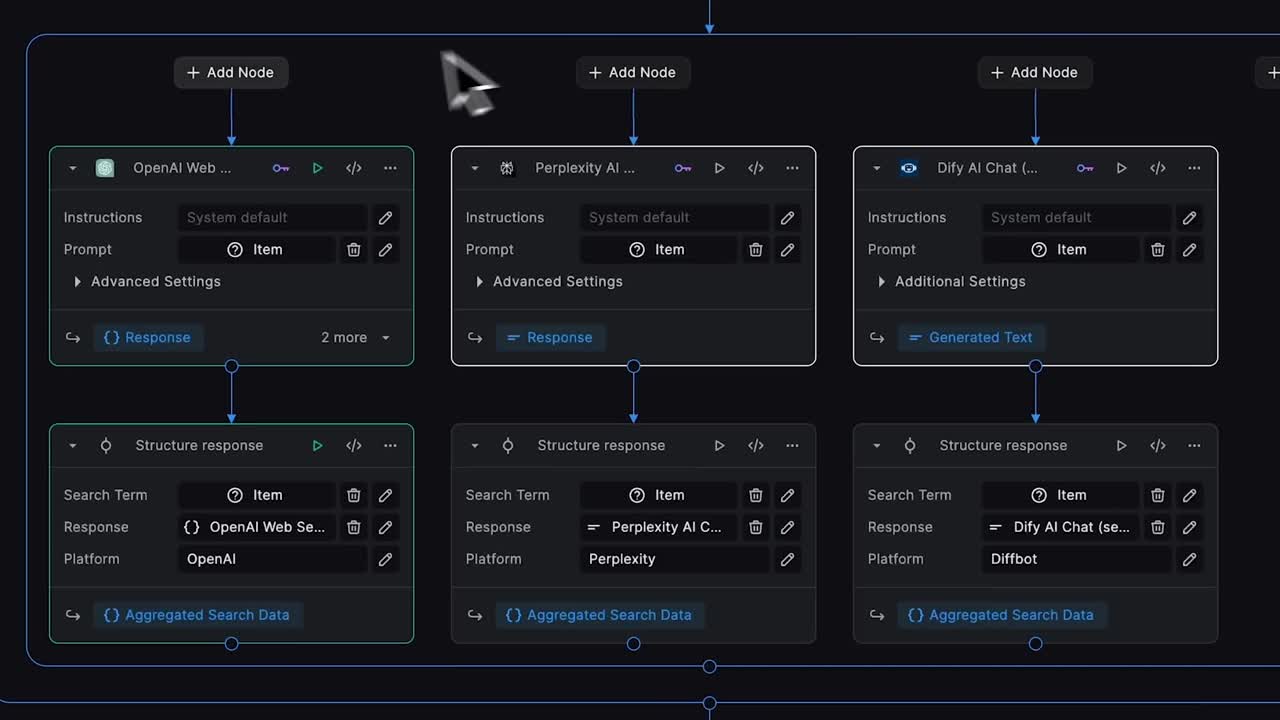
The workflow architecture supports customization. Users can modify which platforms to track, adjust monitoring frequency, or integrate the reports into existing analytics dashboards. Buildship provides the tutorial as a template that teams can adapt to their specific monitoring needs.
Five AI Models, One Workflow
The tutorial leverages five popular AI models through Buildship's unified interface. This multi-model approach provides redundancy and cross-verification, as different AI systems may surface content differently based on their training data and ranking algorithms.
Keyless nodes eliminate the technical overhead of managing multiple API keys and authentication flows. Users configure the workflow once and Buildship handles the underlying connections to each AI platform.
The workflow runs on Buildship's backend infrastructure, which can be scheduled to generate reports at regular intervals. Teams monitoring multiple domains or content types can clone and modify the workflow for different properties without rebuilding the analysis logic.
The tutorial arrives as businesses grapple with measuring ROI from content in an AI-first search landscape. Traditional metrics like organic traffic and keyword rankings provide incomplete pictures when users increasingly get answers from AI systems rather than clicking through to websites.
Sources
1 checkedHow we cover tool news: Create With's tool desk drafts these reports with AI from the sources listed above and checks them against those sources before publishing.





 ElevenLabs

 Glide

 Stripe