 Airtable
Airtable announced on LinkedIn a new integration that connects its database platform directly with Anthropic's Claude AI assistant, enabling teams to automate workflows without leaving their existing Airtable environments.
The integration positions itself as practical rather than experimental. According to the company's post, teams can now "build systems your team can actually use" by combining Airtable's database capabilities with Claude's language processing. The setup process is streamlined to three steps, though Airtable did not provide detailed documentation in the announcement.
What the Integration Enables
The Claude connector allows Airtable users to trigger AI-powered automations directly from their bases. This means data stored in Airtable can be processed, analyzed, or transformed using Claude's capabilities without manual export-import cycles or third-party middleware.
Potential use cases span content generation, data enrichment, and decision support. A marketing team could automatically generate campaign copy from product data, while operations teams might use it to classify and route support tickets based on complexity. The integration essentially embeds conversational AI capabilities into existing database workflows.
This launch follows Airtable's broader AI push earlier this year, which included custom interface elements and an expanded AI Academy for enterprise customers.
Technical Implementation
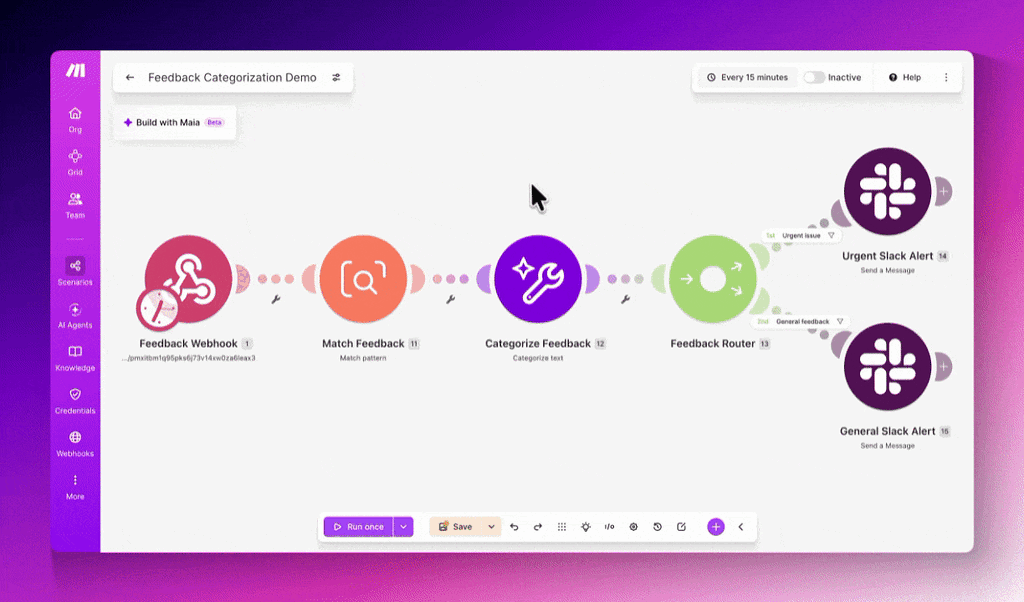
While specific technical details remain limited, the integration appears to function as a native connector rather than requiring external automation platforms like Zapier or Make. This architecture matters for teams concerned about data security and latency, as information stays within Airtable's infrastructure during processing.
The timing aligns with Anthropic's recent API improvements and pricing adjustments for Claude, which have made large-language model integrations more economically viable for workflow automation. Airtable itself recently announced it would automate 5X more work at the same cost due to improved model economics.
For enterprise users, the integration raises questions about data governance and usage limits. Airtable has not yet published detailed documentation about how Claude processes base data, what information leaves Airtable's environment, or whether Claude's outputs are logged or used for model training.
Market Context
The move reflects broader competition among no-code platforms to embed AI capabilities natively. Notion launched AI writing assistants in 2023, while Glide and Softr have integrated various AI features for app building. Airtable's choice of Claude over OpenAI's GPT models or Google's Gemini suggests a deliberate positioning around enterprise reliability and safety.
The integration also signals Airtable's continued focus on making its platform more accessible to non-technical users. By embedding AI capabilities that previously required API knowledge or automation expertise, the company lowers the barrier for teams to experiment with intelligent workflows.
Airtable has not announced pricing details specific to the Claude integration or whether it will consume existing AI credits from Airtable's broader AI features. The company's recent emphasis on cost efficiency suggests the integration may be included in existing plans, but confirmation awaits official documentation.
Sources
1 checkedHow we cover tool news: Create With's tool desk drafts these reports with AI from the sources listed above and checks them against those sources before publishing.



 ElevenLabs
 Notion