 PostHog

PostHog has updated its setup wizard to automate developer onboarding through an AI agent that generates framework-specific installation plans. The tool, accessible via npx -y @posthog/wizard@latest, replaces traditional documentation with an interactive experience that handles library installation and configuration automatically.
The wizard detects a developer's framework, whether React, iOS, Angular, or others, and creates a tailored onboarding plan. Rather than requiring developers to manually parse documentation and configure settings, the system executes installation steps programmatically while providing real-time feedback through multiple interface panes.
Four-Pane Interface Design
The wizard organizes onboarding through four distinct views. A learning pane covers PostHog's architecture and analytics fundamentals, reflecting the platform's expanded scope beyond basic analytics to include product analytics, web analytics, session replay, feature flags, experiments, surveys, and AI observability tools in a single stack.
A terminal-based Hacker News browser provides distraction during installation waits. The visualizer pane gamifies the process with space shooter aesthetics, showing files being modified and dependencies installed in real time. A logs pane maintains traditional debugging output for developers who need granular visibility into the installation process.
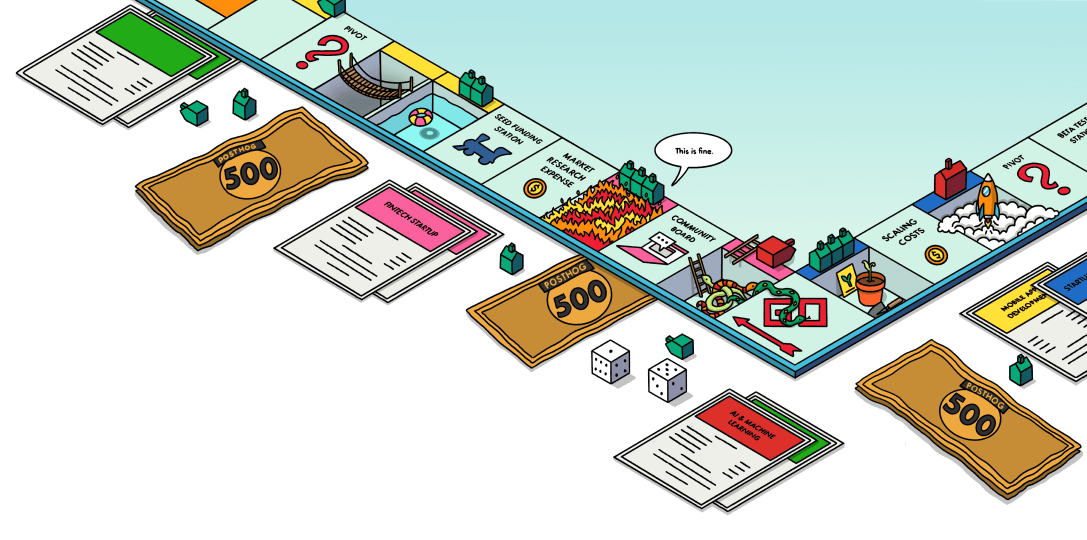
The gamification approach mirrors trends in developer tooling where setup friction remains a common abandonment point. By visualizing typically opaque installation processes and adding interactive elements, PostHog aims to reduce the gap between signup and first data collection.
Broader Agent Strategy
The wizard update follows PostHog's recent moves into AI-assisted workflows. The company previously launched in-app pull request management for agent-driven development and introduced a Slack app that lets non-technical users ship code through conversational interfaces.
The setup wizard represents a different application of automation, targeting the first-run experience rather than ongoing operations. By handling framework detection and dependency management automatically, PostHog reduces the technical barrier to adoption, particularly for teams evaluating analytics platforms across multiple projects with different tech stacks.
Developers can run the wizard on existing sites without modifying their current setup, making it a low-risk evaluation tool. The system creates installation plans adaptively, accounting for existing dependencies and configuration files rather than following a one-size-fits-all template.
For teams managing analytics across multiple products built with different frameworks, the wizard's framework-agnostic approach could simplify standardization efforts. Rather than maintaining separate onboarding documentation for React, Angular, iOS, and other stacks, organizations can point developers to a single command that adapts to their environment.
The tool is available now through npm and requires no PostHog account to run initial setup steps, though configuration and data collection require authentication. PostHog continues to offer its open-source product analytics platform with self-hosted and cloud deployment options.
Sources
1 checkedHow we cover tool news: Create With's tool desk drafts these reports with AI from the sources listed above and checks them against those sources before publishing.





 Stripe
 Supabase