 PostHog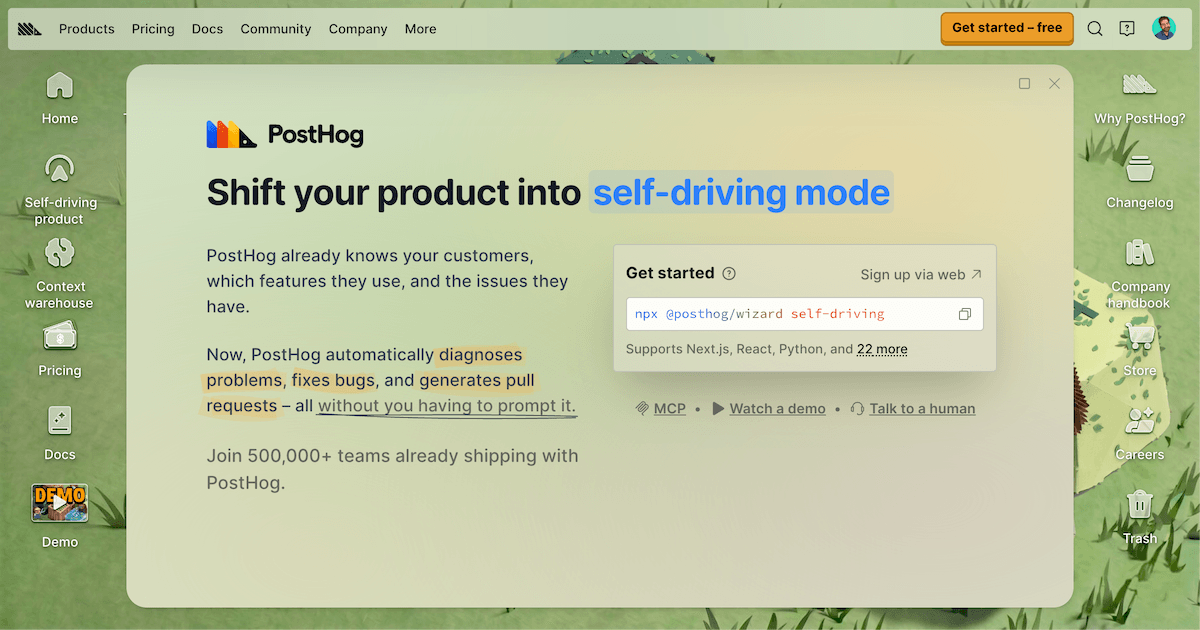
Product teams can spend hours watching session recordings to understand why customers leave. PostHog now wants an AI prompt to do the first pass instead.
The newly demonstrated PostHog AI session summarization feature lets a user ask the analytics platform to summarize the final session of every customer who churned during a specified period, then suggest likely reasons for that churn. In the example shared on LinkedIn, the entire workflow is triggered with one natural-language instruction: “Summarize the last session of every user who churned this month and give me your best guess why.”
That is a short demo, but it points to a meaningful change in how teams can investigate customer behavior. Rather than treating session replay as a library of videos that someone must inspect individually, PostHog is turning those recordings into data that can be queried and synthesized.
From watching recordings to asking questions
Session replay is useful because it shows what aggregate metrics often conceal: confusing navigation, repeated clicks, broken flows and moments when a user appears to give up. Its weakness is the amount of human review required. A team may know that dozens of customers cancelled, yet still need to locate each person’s final visit, watch the recording and manually compare patterns.
PostHog AI session summarization compresses that process into a prompt. Based on the demonstrated workflow, it can:
- Identify users matching a churn-related condition and time period
- Retrieve the final recorded session for each user
- Summarize what happened during those sessions
- Synthesize possible reasons for churn across the selected group
The result should be treated as a starting point, not a definitive diagnosis. A replay can show that someone encountered an error or abandoned a workflow, but it cannot necessarily establish why the customer cancelled. Pricing, missing features, internal budget decisions or an unsuccessful support interaction may not appear in the recording. PostHog’s wording acknowledges that limitation by asking the AI for its “best guess.”
The feature builds on PostHog’s broader effort to automate replay analysis. Create With previously covered how Replay Vision finds hidden friction in session recordings, as well as its use in turning rage-click reports into potential fixes. The churn prompt extends that idea from analyzing an individual recording to answering a business question across a cohort.
Why this matters for smaller teams
For a founder or a lean product team, the practical benefit is prioritization. Reviewing every churned customer’s final session may be theoretically valuable, but it is often displaced by support, sales and development work. An AI-generated synthesis can narrow the recordings worth watching and surface recurring issues for further investigation.
A useful follow-up workflow would be to validate the AI’s hypotheses against other PostHog data. Teams could check whether affected users shared the same funnel drop-off, error, device type, subscription tier or feature usage pattern. They could also compare the summary with cancellation surveys and support conversations before deciding what to fix.
There are still unanswered operational questions. The announcement does not specify pricing, plan requirements, usage limits or whether access is being rolled out gradually. PostHog’s public changelog shows continued investment in AI features, including prompt management and feedback-driven reporting, but the supplied changelog entry does not document this session summarization capability separately.
Even with those gaps, the direction is clear. PostHog is positioning session replay less as footage to consume and more as evidence its AI can investigate. For teams drowning in recordings, the important shift is not simply faster summaries. It is the ability to begin with a product question and let the software assemble the relevant behavioral context.
Frequently asked questions
What is PostHog AI session summarization?
PostHog AI session summarization is a natural-language workflow that reviews selected session replays and produces concise accounts of what users did. In the demonstrated example, it summarizes the final session of users who churned during the month and suggests possible reasons they left.
Can PostHog AI determine exactly why a customer churned?
Not necessarily. Session recordings provide behavioral evidence, but they may not capture factors such as budget changes, pricing concerns or offline decisions. Teams should validate the AI’s suggested reasons against analytics, surveys, support records and direct customer feedback.
Which PostHog plan includes AI session summarization?
The announcement does not state which plan is required, whether the feature carries separate usage limits or how broadly it is available. Teams should consult PostHog’s current product interface, documentation or pricing information for account-specific access details.
Sources
1 checkedHow we cover tool news: Create With's tool desk drafts these reports with AI from the sources listed above and checks them against those sources before publishing.



 Vercel

 ElevenLabs