 Netlify
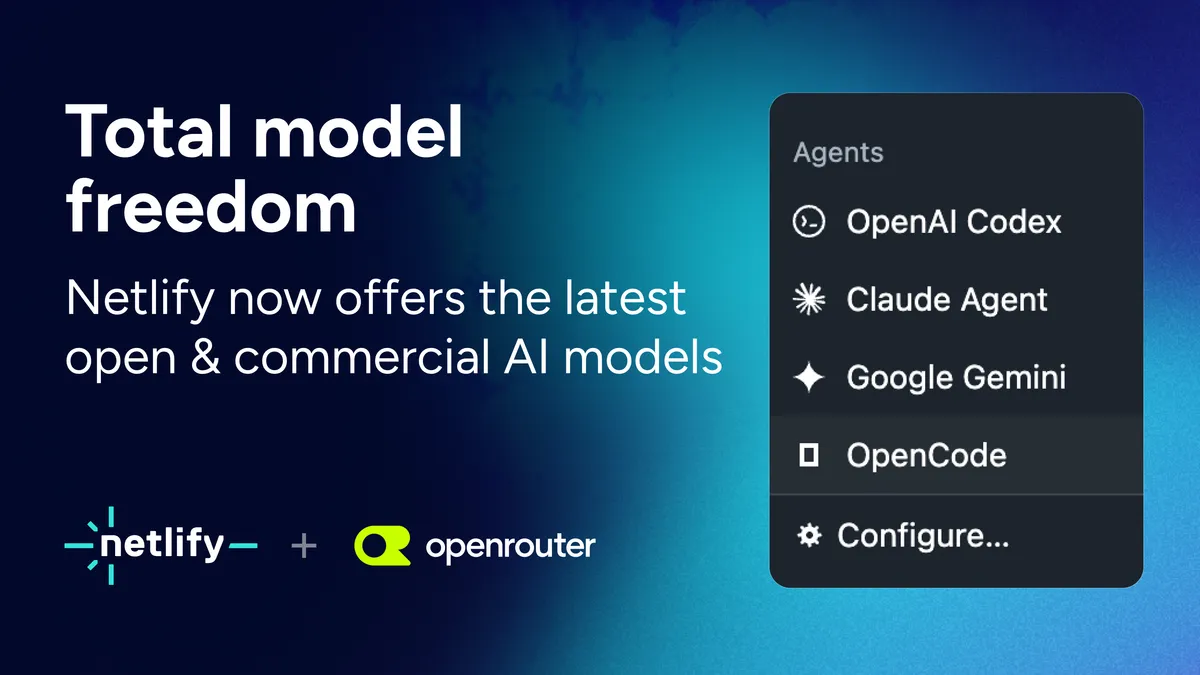
Netlify is opening its AI infrastructure to every customer, adding hundreds of open-weight models alongside commercial options through Agent Runners and AI Gateway. The move gives developers a way to test and deploy models from DeepSeek, Qwen, GLM and Kimi on the same platform that runs their web applications.
The company announced the expansion on August 6, positioning model choice as a production concern rather than a one-time technical decision. Netlify says the new catalogue is available through partnerships with OpenRouter and OpenCode, while its existing commercial model support remains in place.
That breadth matters because model performance can vary sharply by workload. A model that works well for interface generation may not be the best option for debugging, large code refactors or a long-running agent task. Pricing and capabilities also change quickly, making an application tied tightly to one provider harder to adapt.
Two Routes to a Broader Model Catalogue
Netlify is exposing the expanded model selection through two parts of its platform. Agent Runners lets developers start agent runs using supported models, while AI Gateway provides a central route for applications that need to call AI models. Together, they are intended to cover both agent-driven development workflows and AI features embedded in deployed products.
The practical change is consolidation. A team can build, experiment and ship from Netlify rather than treating model access and application deployment as entirely separate infrastructure decisions. According to the company, the models run alongside the production infrastructure used by the application, although the announcement does not detail model-specific limits, usage charges or performance guarantees.
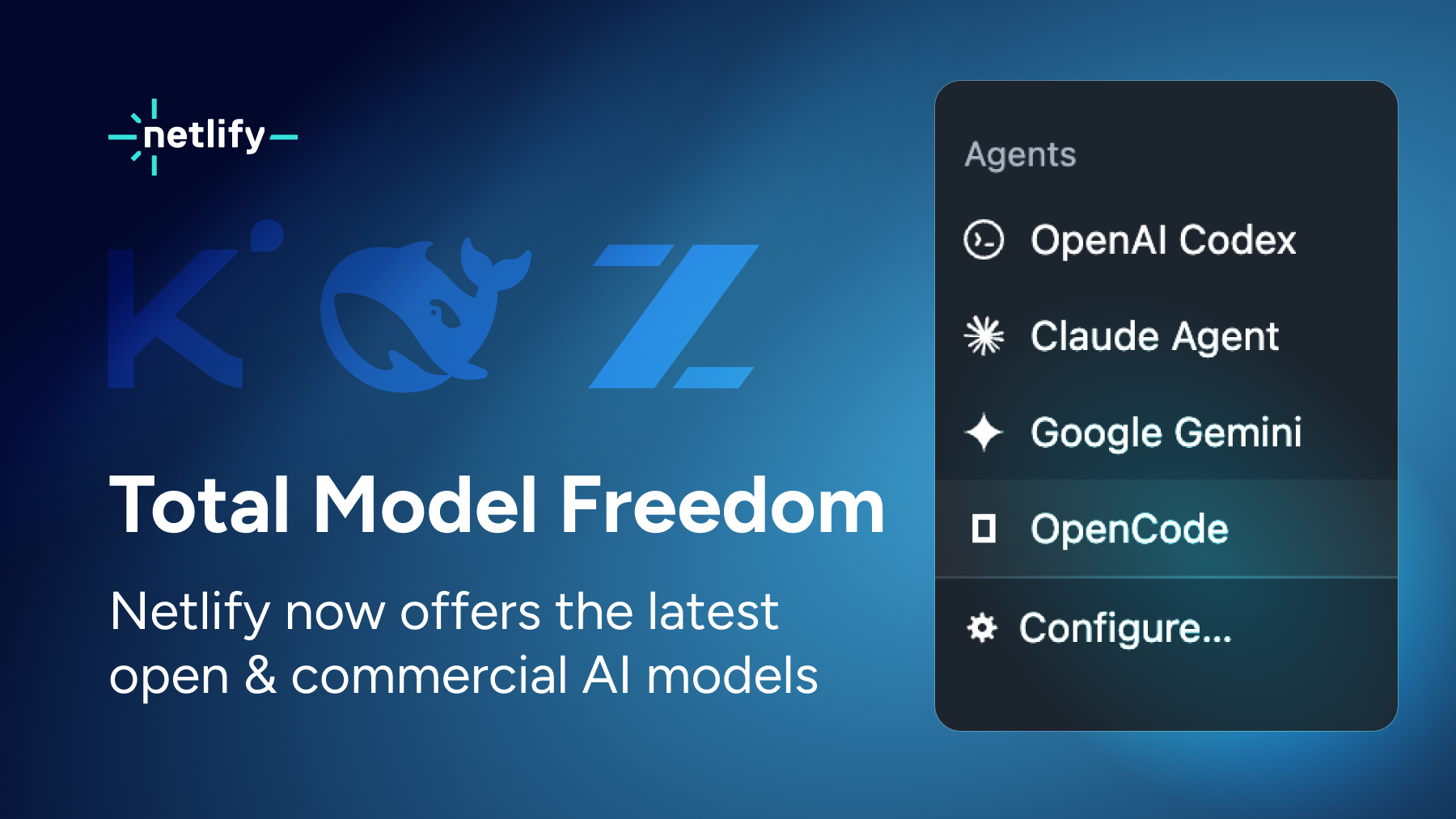
Netlify describes the update as “full model freedom,” but builders should interpret that as broader access rather than an assurance that every model is interchangeable. Applications still need evaluation criteria, fallback behaviour and monitoring. Outputs can differ in formatting, latency, context handling and tool-use reliability, even when two models nominally support the same task.
For small teams, the update could reduce the operational work involved in comparing providers. A builder creating a support assistant, content workflow or code-generation feature can test an open model against a commercial alternative without first designing a separate deployment stack for each one. It may also make it easier to switch models as new releases arrive.
Why Netlify Is Betting on Open Models
CEO Mathias Biilmann argued in the announcement that open models are improving quickly enough to match or exceed commercial systems on some coding, image and video tasks. Netlify’s stated position is that developers should not have to select a single long-term winner in a market where the leading model can change within weeks.
The release also fits into a wider push to make Netlify more useful for agentic development. It follows the company’s adoption of a stateless MCP specification with apps and tasks extensions, another effort aimed at standardising how AI systems interact with tools and deployed applications.
There are still unanswered questions. Netlify has not disclosed pricing by model, whether availability differs by region or what quotas apply to individual customer plans. Builders evaluating the feature for a production workload will need to consult the Agent Runners and AI Gateway documentation for current configuration and operational details.
Still, the strategic direction is clear. Netlify wants model selection to look less like a permanent architecture choice and more like a configurable part of the application stack. For businesses already deploying on the platform, that could shorten the path from an AI prototype to a production feature, provided teams continue to test each model against their own cost, quality and reliability requirements.
Frequently asked questions
What is Netlify Agent Runners and AI Gateway?
Agent Runners and AI Gateway are Netlify services for running AI agents and connecting deployed applications to supported AI models. The update expands both services with hundreds of open-weight models alongside existing commercial options.
Which models are available through the update?
Netlify specifically names DeepSeek, Qwen, GLM and Kimi, delivered through partnerships with OpenRouter and OpenCode. The company says hundreds of open models are available, but the announcement does not provide a complete model list.
Who can access the new models, and what do they cost?
Netlify says the expanded model access is available to every customer starting August 6, 2026. The announcement does not specify model-level pricing, plan quotas or usage limits.
Sources
1 checkedHow we cover tool news: Create With's tool desk drafts these reports with AI from the sources listed above and checks them against those sources before publishing.




 ElevenLabs

 Glide

 Stripe